

Hey there! As a supplier of piston rods, I often get asked, "Are piston rods easy to install?" Well, let's dive into this question and break it down.
First off, what are piston rods? Piston rods are crucial components in many mechanical systems, especially in hydraulic and pneumatic cylinders. They transfer the force from the piston to the external load, allowing for smooth and efficient operation of machinery. We offer a variety of piston rods, like the 316 Stainless Steel Hydraulic Precision Piston Rod, CK45 Hollow Piston Rod, and Stainless Steel 304 Hydraulic Precision Piston Rod. Each type has its own features and is suitable for different applications.
Now, back to the main question—are they easy to install? The answer is, it depends. There are several factors that can affect the ease of installation.
1. Design and Compatibility
One of the most important things is the design of the piston rod and its compatibility with the existing system. If the piston rod is custom-made to fit a specific cylinder or machine, the installation process can be relatively straightforward. For example, when we manufacture our 316 Stainless Steel Hydraulic Precision Piston Rod, we take precise measurements and ensure that it meets the exact specifications of our clients' systems. This means that when it arrives at their facility, it's ready to be installed with minimal adjustments.
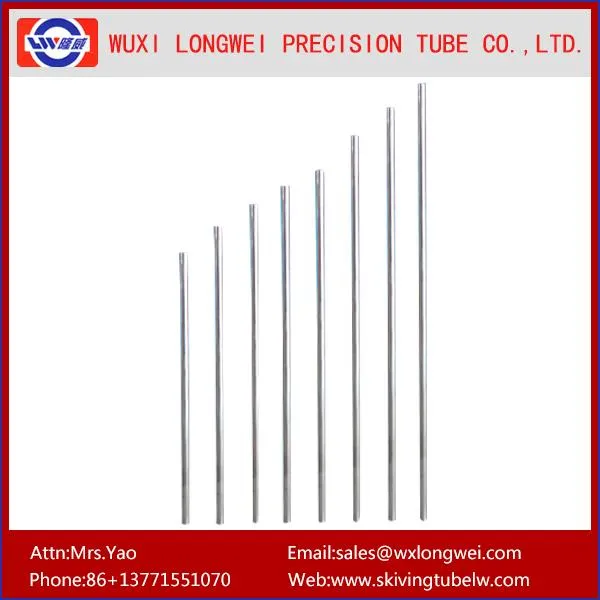

On the flip side, if you're trying to retrofit a piston rod into an older or non - standard system, it can be a real headache. You might have to deal with issues like misaligned holes, incorrect thread sizes, or incompatible dimensions. In such cases, additional machining or modifications may be required, which can significantly increase the installation time and complexity.
2. Skill and Experience of the Installer
Another key factor is the skill and experience of the person doing the installation. A trained and experienced technician who is familiar with hydraulic and pneumatic systems will find it much easier to install a piston rod compared to someone who is new to the job. An experienced installer knows how to handle the components properly, use the right tools, and follow the correct procedures.
For instance, during the installation of a CK45 Hollow Piston Rod, an experienced installer will know how to align the rod accurately, torque the fasteners to the correct specification, and bleed the system to remove any air bubbles. They also have the knowledge to troubleshoot any problems that may arise during the installation process.
Without the proper skills and experience, there's a higher risk of making mistakes, such as over - tightening the bolts, damaging the seals, or not installing the rod correctly. These mistakes can lead to leaks, premature wear and tear, and even system failure.
3. Tools and Equipment
The availability of the right tools and equipment also plays a big role in the ease of installation. Installing a piston rod typically requires tools like wrenches, sockets, torque wrenches, and seal installation tools. If you don't have these tools on hand, or if they're not the correct size or type, the installation process can be delayed or become more difficult.
In addition to basic hand tools, some installations may require specialized equipment, such as a hydraulic press or a rod straightening machine. For example, if the piston rod has been damaged during shipping and needs to be straightened before installation, a hydraulic press will be necessary.
4. System Complexity
The overall complexity of the system in which the piston rod is being installed can also impact the installation process. Simple systems, like a single - acting hydraulic cylinder in a small piece of machinery, are usually easier to work on. The components are more accessible, and there are fewer interconnections to worry about.
On the other hand, complex systems, such as those found in large industrial machinery or heavy - duty vehicles, can be a nightmare to install a piston rod in. These systems often have multiple cylinders, valves, and hoses, and the piston rod may be located in a hard - to - reach area. In addition, there may be strict safety and environmental regulations that need to be followed during the installation.
Tips for Easy Installation
If you're planning to install a piston rod, here are some tips to make the process as smooth as possible:
- Do Your Research: Before you start the installation, familiarize yourself with the system and the piston rod. Read the installation manual, watch online tutorials if available, and understand the steps involved.
- Gather the Right Tools: Make sure you have all the necessary tools and equipment on hand before you begin. Check them for proper functionality and ensure they're the correct size.
- Take Your Time: Rushing through the installation can lead to mistakes. Take your time, follow the steps carefully, and double - check your work at each stage.
- Seek Professional Help if Needed: If you're not confident in your abilities or if the installation seems too complex, don't hesitate to call in a professional. It's better to spend a little extra money on a professional installation than to risk damaging the components or causing a system failure.
In conclusion, while piston rods can be relatively easy to install in some cases, there are many factors that can make the process more challenging. As a piston rod supplier, we're here to help you make the right choice and provide you with all the information you need. If you're interested in our 316 Stainless Steel Hydraulic Precision Piston Rod, CK45 Hollow Piston Rod, or Stainless Steel 304 Hydraulic Precision Piston Rod, or if you have any questions about installation, feel free to reach out. We're always happy to discuss your requirements and help you find the best solution for your needs.
References
- Hydraulic and Pneumatic Systems Handbook
- Machinery's Handbook


