

Hey there! As a supplier of hollow axles, I've had my fair share of experiences with how these nifty components perform in different conditions. Today, I'm gonna dive into how hollow axles perform in low - temperature environments.
First off, let's talk about what hollow axles are. They're basically axles with a hollow center, and they've got a bunch of advantages. They're lighter than solid axles, which can improve fuel efficiency in vehicles and reduce the overall weight of machinery. This weight reduction also means less stress on other components, leading to longer service life.
Now, when it comes to low - temperature environments, things get a bit tricky. Cold temperatures can have a significant impact on the performance of materials. One of the main concerns is the change in material properties. Most metals become more brittle at low temperatures. This is because the atoms in the metal lattice have less energy to move around, making it easier for cracks to form and propagate.
For hollow axles, this brittleness can be a real problem. If an axle is subjected to sudden impacts or high stress in cold conditions, there's a higher risk of it cracking or even breaking. However, the design of hollow axles can actually work in their favor here. The hollow center can act as a sort of buffer, absorbing some of the energy from impacts and reducing the stress concentration on the outer surface.
Another aspect to consider is the effect of low temperatures on lubrication. In cold weather, lubricants can thicken, which can lead to increased friction and wear on the axle bearings. This can cause the axles to work harder, potentially reducing their efficiency and lifespan. As a supplier, I always recommend using lubricants specifically designed for low - temperature use. These lubricants maintain their viscosity and lubricating properties even in freezing conditions, ensuring smooth operation of the axles.
Let's also touch on the issue of thermal expansion. When temperatures drop, materials contract. This can cause problems if the components of the axle system are not designed to accommodate this contraction properly. For example, if the fit between the axle and its housing is too tight, the contraction can lead to excessive stress and possible damage. On the other hand, if the fit is too loose, it can result in play and reduced stability.
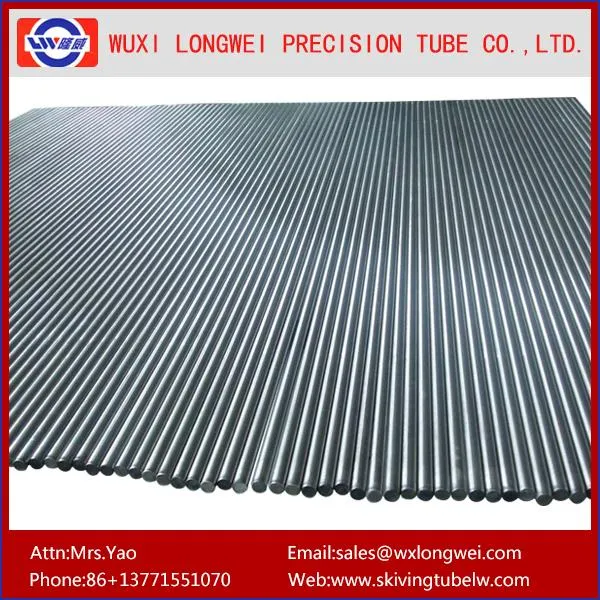

At our company, we take these factors into account when manufacturing hollow axles for low - temperature applications. We use high - quality materials that have good low - temperature toughness. For instance, we often work with materials like 40Cr Chrome Hydraulic Cylinder Piston Rod and 42CrMo4 40Cr Steel Precision Shaft, which are known for their excellent mechanical properties even in cold conditions.
We also pay close attention to the design and manufacturing process. Our axles are precision - engineered to ensure the right fit and tolerance, taking into account the thermal expansion and contraction that occurs in low - temperature environments. This helps to minimize the risk of damage and ensures reliable performance.
In addition to the material and design aspects, we also offer comprehensive testing and quality control. Before our hollow axles leave the factory, they undergo a series of tests, including low - temperature testing. We simulate real - world low - temperature conditions to ensure that the axles can withstand the stress and perform as expected.
Now, let's talk about some real - world applications. Hollow axles are widely used in industries such as automotive, construction, and agriculture. In cold regions, these industries face unique challenges. For example, in the automotive industry, vehicles need to operate reliably in freezing temperatures. Hollow axles can contribute to better fuel efficiency and handling, but only if they're designed and maintained properly.
In the construction industry, heavy machinery like forklifts often operate in cold warehouses or outdoor construction sites. Forklifts rely on axles to support their load and move smoothly. Our Forklift Piston Rod is an essential part of the forklift's axle system, and it's designed to perform well in low - temperature environments.
So, if you're in an industry that requires reliable performance in low - temperature conditions, you need to choose the right hollow axles. At our company, we've got the expertise and experience to provide you with high - quality hollow axles that can meet your needs. Whether you're looking for axles for a small vehicle or heavy - duty machinery, we've got you covered.
If you're interested in learning more about our hollow axles or have any questions about their performance in low - temperature environments, don't hesitate to reach out. We're always happy to have a chat and discuss how we can help you with your specific requirements. Whether it's about the materials, the design, or the testing process, we'll provide you with all the information you need.
In conclusion, while low - temperature environments pose challenges for hollow axles, with the right materials, design, and maintenance, they can perform reliably. As a supplier, we're committed to providing our customers with the best - in - class products that can withstand the toughest conditions. So, if you're in the market for high - quality hollow axles, give us a shout, and let's start a conversation about your procurement needs.
References
- Smith, J. (2018). "Materials Science in Cold Environments". Journal of Materials Engineering.
- Brown, A. (2019). "Axle Design for Extreme Temperatures". Automotive Engineering Review.


