

In the vast expanse of the world's oceans, marine engines stand as the heartbeats of vessels, powering them across the waves. Among the numerous components that make up these complex machines, piston rods play a crucial yet often overlooked role. As a trusted piston rods supplier, I am excited to delve into the fascinating world of how piston rods work in a marine engine, shedding light on their functionality, importance, and the various types available.

The Basics of a Marine Engine
Before we explore the role of piston rods, it's essential to understand the fundamental workings of a marine engine. Most marine engines are internal combustion engines, which operate on the principle of converting chemical energy from fuel into mechanical energy. This process involves a series of four strokes: intake, compression, power, and exhaust.

During the intake stroke, the piston moves downward, creating a vacuum that draws a mixture of air and fuel into the combustion chamber. The compression stroke follows, where the piston moves upward, compressing the air-fuel mixture. When the mixture is compressed to a high pressure, a spark plug ignites it, causing a rapid expansion of gases. This expansion forces the piston downward during the power stroke, generating the mechanical energy that drives the engine. Finally, the exhaust stroke expels the burned gases from the combustion chamber, making way for the next cycle.
The Role of Piston Rods
Piston rods, also known as connecting rods, are critical components that link the piston to the crankshaft. Their primary function is to transmit the force generated by the expanding gases in the combustion chamber to the crankshaft, converting the linear motion of the piston into rotational motion. This rotational motion is then used to drive the propeller, propelling the vessel forward.
The design and construction of piston rods are crucial to ensure efficient and reliable operation. They must be strong enough to withstand the high forces and stresses generated during the power stroke, while also being lightweight to minimize inertia and reduce energy losses. Additionally, piston rods must have precise dimensions and tolerances to ensure proper alignment and smooth operation.
Types of Piston Rods
There are several types of piston rods used in marine engines, each with its own unique characteristics and applications. Some of the most common types include:
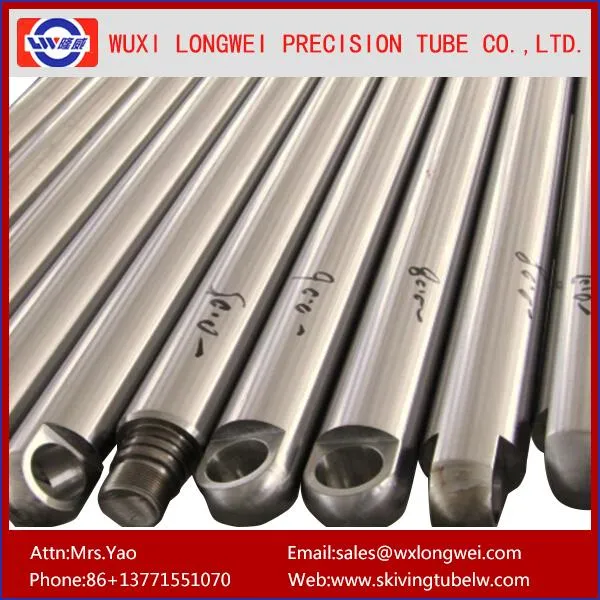
- Hard Chrome Piston Rod and Hydraulic Chrome Rod: These rods are coated with a layer of hard chrome, which provides excellent wear resistance, corrosion resistance, and surface hardness. They are commonly used in hydraulic systems and applications where high precision and durability are required. Hard Chrome Piston Rod and Hydraulic Chrome Rod
- 316 Stainless Steel Hydraulic Precision Piston Rod: Made from high-quality 316 stainless steel, these rods offer superior corrosion resistance and mechanical properties. They are ideal for use in marine environments, where exposure to saltwater and other corrosive substances is common. 316 Stainless Steel Hydraulic Precision Piston Rod
- Oil Cylinder Piston Rod Processing: These rods are specifically designed for use in oil cylinders, which are used to control the movement of various components in a marine engine. They are typically made from high-strength steel and undergo a series of precision machining processes to ensure accurate dimensions and smooth operation. Oil Cylinder Piston Rod Processing
Working Principle of Piston Rods
The working principle of piston rods can be explained in the context of the four-stroke cycle of a marine engine. During the intake stroke, the piston moves downward, and the piston rod follows this motion, transferring the force to the crankshaft. As the piston reaches the bottom of its stroke, the intake valve closes, and the compression stroke begins.
During the compression stroke, the piston moves upward, compressing the air-fuel mixture. The piston rod transmits the upward force to the crankshaft, causing it to rotate. When the mixture is compressed to a high pressure, a spark plug ignites it, and the power stroke begins.
During the power stroke, the expanding gases force the piston downward with great force. The piston rod transfers this force to the crankshaft, causing it to rotate at a high speed. This rotational motion is then used to drive the propeller, propelling the vessel forward.
Finally, during the exhaust stroke, the piston moves upward again, expelling the burned gases from the combustion chamber. The piston rod continues to transmit the force to the crankshaft, completing the four-stroke cycle.
Importance of Piston Rods in Marine Engines
Piston rods are essential components in marine engines, and their proper functioning is crucial for the overall performance and reliability of the engine. Here are some of the key reasons why piston rods are so important:
- Power Transmission: As mentioned earlier, piston rods play a vital role in transmitting the force generated by the expanding gases in the combustion chamber to the crankshaft. Without piston rods, the linear motion of the piston could not be converted into rotational motion, and the engine would not be able to generate power.
- Engine Balance: Piston rods help to maintain the balance of the engine by ensuring that the forces acting on the piston are evenly distributed. This is important for reducing vibration and noise, improving fuel efficiency, and extending the lifespan of the engine.
- Durability and Reliability: Marine engines operate in harsh environments, and piston rods must be able to withstand the high forces, temperatures, and pressures generated during operation. High-quality piston rods are designed and manufactured to meet these demanding conditions, ensuring long-term durability and reliability.
Maintenance and Inspection of Piston Rods
To ensure the proper functioning of piston rods in a marine engine, regular maintenance and inspection are essential. Here are some of the key maintenance and inspection tasks that should be performed:
- Visual Inspection: Regular visual inspections should be conducted to check for signs of wear, damage, or corrosion on the piston rods. Any cracks, bends, or other defects should be addressed immediately to prevent further damage to the engine.
- Measurement of Dimensions: The dimensions of the piston rods should be measured regularly to ensure that they are within the specified tolerances. Any deviations from the specifications could indicate a problem with the rods or the engine.
- Lubrication: Proper lubrication is essential for the smooth operation of piston rods. The lubricant helps to reduce friction and wear, prevent corrosion, and dissipate heat. The lubricant should be changed regularly according to the manufacturer's recommendations.
- Alignment Check: The alignment of the piston rods should be checked regularly to ensure that they are properly aligned with the piston and the crankshaft. Misalignment can cause excessive wear, vibration, and noise, and can lead to premature failure of the rods and other engine components.
Conclusion
In conclusion, piston rods are critical components in marine engines, playing a vital role in power transmission, engine balance, and overall performance. As a piston rods supplier, we understand the importance of providing high-quality products that meet the demanding requirements of the marine industry. Whether you need Hard Chrome Piston Rod and Hydraulic Chrome Rod, 316 Stainless Steel Hydraulic Precision Piston Rod, or Oil Cylinder Piston Rod Processing, we have the expertise and experience to meet your needs.
If you are interested in learning more about our piston rods or would like to discuss your specific requirements, please do not hesitate to contact us. We look forward to the opportunity to work with you and provide you with the best piston rod solutions for your marine engine.
References
- Heywood, J. B. (1988). Internal Combustion Engine Fundamentals. McGraw-Hill.
- Taylor, C. F. (1966). The Internal Combustion Engine in Theory and Practice. MIT Press.
- Society of Automotive Engineers (SAE). (2018). SAE Handbook. SAE International.


