

The electrical conductivity properties of honing tubes are of great significance, especially in various industrial applications where electrical performance plays a crucial role. As a professional honing tube supplier, I am well - versed in these properties and their implications.
1. Composition and Its Impact on Electrical Conductivity
Honing tubes are typically made from different materials, and the composition directly affects their electrical conductivity. Common materials include carbon steel, stainless steel, and alloy steel.
Carbon steel is one of the most widely used materials for honing tubes. It contains a certain amount of carbon, which can influence its electrical properties. The presence of carbon atoms in the iron lattice can disrupt the free movement of electrons to some extent. Compared to pure metals, carbon steel has a relatively lower electrical conductivity. For example, pure iron has a high electrical conductivity due to its well - ordered atomic structure that allows electrons to move freely. However, when carbon is added, the carbon atoms create lattice distortions. These distortions act as scattering centers for electrons, increasing the resistance and thus reducing the electrical conductivity.
Stainless steel, on the other hand, is an alloy that contains chromium, nickel, and other elements in addition to iron. The addition of chromium forms a passive oxide layer on the surface of the stainless steel, which provides excellent corrosion resistance. This oxide layer, however, can have an impact on the electrical conductivity. In general, stainless steel has a lower electrical conductivity compared to carbon steel. The alloying elements in stainless steel create a more complex atomic structure, which further restricts the movement of electrons.
Alloy steel honing tubes are made by adding various alloying elements such as manganese, vanadium, and molybdenum to improve specific properties like strength and hardness. These alloying elements can also affect the electrical conductivity. Each element has a different effect on the electron mobility within the metal lattice. For instance, manganese can increase the strength of the steel but may also reduce its electrical conductivity by introducing more scattering sites for electrons.
2. Microstructure and Electrical Conductivity
The microstructure of a honing tube is another important factor influencing its electrical conductivity. The microstructure can be controlled through heat treatment processes such as annealing, quenching, and tempering.
Annealing is a heat treatment process where the honing tube is heated to a specific temperature and then slowly cooled. This process helps to relieve internal stresses and produce a more uniform and coarse - grained microstructure. A coarse - grained microstructure generally has lower electrical resistance compared to a fine - grained one. In a coarse - grained structure, the grain boundaries are fewer, and electrons can move more freely through the grains without being scattered as much at the boundaries.
Quenching, on the other hand, involves rapid cooling of the honing tube from a high temperature. This results in a fine - grained and hard microstructure. The fine grains increase the number of grain boundaries, which act as barriers to electron movement. As a result, the electrical conductivity of a quenched honing tube is lower compared to an annealed one.
Tempering is often performed after quenching to reduce the brittleness of the quenched steel. It involves reheating the quenched honing tube to a relatively low temperature. Tempering can modify the microstructure and improve the electrical conductivity to some extent by reducing the internal stresses and changing the distribution of alloying elements within the grains.
3. Surface Condition and Electrical Conductivity
The surface condition of a honing tube can also affect its electrical conductivity. A smooth and clean surface is essential for good electrical contact and conductivity.
During the honing process, the inner surface of the tube is machined to achieve a high - precision finish. A well - honed surface with a low surface roughness can provide better electrical contact when the tube is used in electrical applications. Rough surfaces can increase the contact resistance, as the actual contact area between the tube and other electrical components is reduced. The uneven surface can cause local hotspots and increase the overall resistance of the electrical circuit.
In addition, the presence of contaminants or oxidation on the surface of the honing tube can significantly reduce its electrical conductivity. Oxidation forms an insulating layer on the surface, which acts as a barrier to electron flow. For example, rust on a carbon steel honing tube can prevent the efficient transfer of electrical current. Regular cleaning and proper storage of the honing tubes are necessary to maintain their surface condition and electrical conductivity.
4. Applications Based on Electrical Conductivity
The electrical conductivity properties of honing tubes determine their suitability for different applications.
In electrical and electronic industries, honing tubes with relatively high electrical conductivity are preferred. For example, in some electrical connectors or conductors, honing tubes made of materials with good electrical conductivity can ensure efficient power transmission. Stainless steel honing tubes may be used in applications where both corrosion resistance and some level of electrical conductivity are required, such as in certain electronic enclosures.
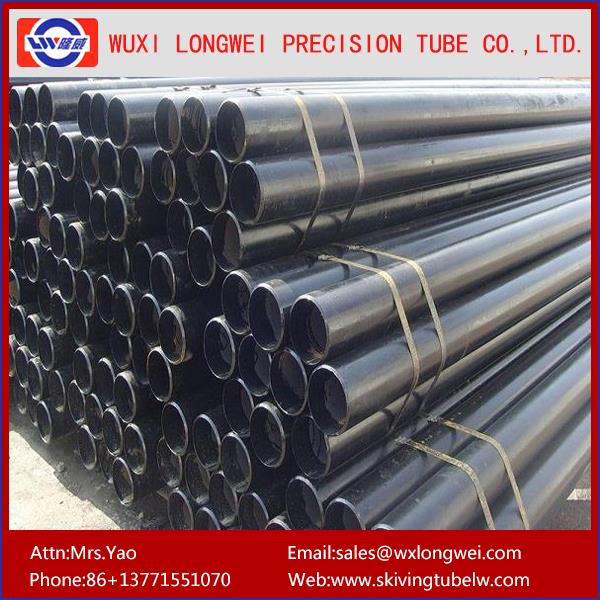

In the automotive industry, honing tubes are used in various hydraulic and electrical systems. The electrical conductivity of the tubes can be important in applications where electrical signals need to be transmitted, such as in sensors or actuators. Carbon steel honing tubes are commonly used in automotive applications due to their good combination of mechanical properties and moderate electrical conductivity.
In the aerospace industry, the requirements for honing tubes are more stringent. The tubes need to have high strength, low weight, and appropriate electrical conductivity. Alloy steel honing tubes are often used in aerospace applications, as they can be tailored to meet the specific electrical and mechanical requirements.
5. Our Product Offerings
As a leading honing tube supplier, we offer a wide range of honing tubes with different electrical conductivity properties to meet the diverse needs of our customers.
Our Honed Steel Tubing is made from high - quality carbon steel, which provides a good balance between mechanical strength and electrical conductivity. These tubes are suitable for a variety of industrial applications where both electrical and mechanical performance are important.
The High Precision Seamless Stainless Steel Hydraulic Tube we offer has excellent corrosion resistance and can be used in applications where electrical conductivity is required in a corrosive environment. The high - precision honing process ensures a smooth surface finish, which helps to maintain good electrical contact.
Our CK45 Precision Thick Walled Seamless Steel Honed Tube is made from CK45 steel, which has specific mechanical and electrical properties. The thick - walled design provides additional strength, while the honing process ensures high - precision dimensions and a good surface finish for electrical applications.
If you are looking for honing tubes with specific electrical conductivity properties, our team of experts can provide you with detailed technical information and guidance. We can help you select the most suitable honing tubes for your application based on your requirements. Whether you need tubes for electrical, automotive, aerospace, or other industries, we have the products and expertise to meet your needs. Contact us today to start a procurement discussion and find the best honing tube solutions for your projects.
References
- Callister, W. D., & Rethwisch, D. G. (2011). Materials Science and Engineering: An Introduction. Wiley.
- ASM Handbook Committee. (1990). ASM Handbook Volume 4: Heat Treating. ASM International.
- Davis, J. R. (1998). Stainless Steels. ASM International.


