

Hey there! As a piston rod supplier, I've been getting a lot of questions lately about how the diameter of a piston rod affects its performance. So, I thought I'd sit down and write this blog to share some insights.
First off, let's talk about what a piston rod is. In simple terms, a piston rod is a crucial part in many mechanical systems, like engines and hydraulic cylinders. It connects the piston to other components, transferring force and motion. Now, the diameter of this rod might seem like a small detail, but it can have a huge impact on how well the whole system works.
Strength and Load - Bearing Capacity
One of the most obvious impacts of piston rod diameter is on its strength and load - bearing capacity. A thicker piston rod, with a larger diameter, can handle more stress. When a piston moves back and forth, it experiences a lot of pressure. If the load is high and the rod is too thin, it might bend or even break. For example, in heavy - duty industrial machinery, a larger diameter piston rod is often used. These machines have to deal with high - pressure hydraulic systems or powerful engines, and a small - diameter rod just wouldn't be up to the task.
Let's say you're using a piston rod in a construction vehicle. The hydraulic cylinders that operate the digging arm need to be extremely strong. A larger diameter piston rod can withstand the intense forces generated during the digging process. On the other hand, in a small, low - power engine, like the one in a lawnmower, a thinner piston rod can do the job just fine because the loads are much lower.
Stability and Alignment
The diameter also affects the stability and alignment of the piston. A wider rod provides more stability. When the piston moves, it needs to stay in a straight line to work efficiently. A larger diameter rod is less likely to wobble or deviate from its path. This is especially important in precision machinery. For instance, in a high - performance racing engine, every little bit of precision matters. A stable piston rod ensures that the piston moves smoothly, which in turn improves the overall performance of the engine.
If the piston rod is too thin, it might start to vibrate or move out of alignment. This can lead to uneven wear on the piston and other components, reducing the lifespan of the entire system. And that's not something you want, whether you're running a small business or a large - scale manufacturing operation.
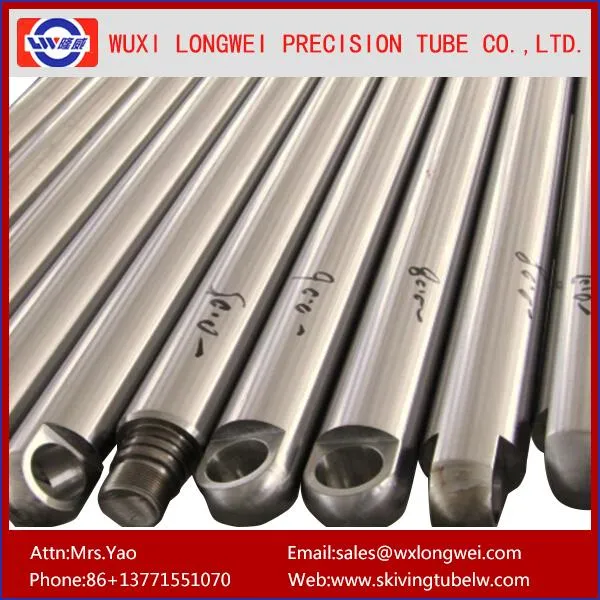
Heat Dissipation
Heat is another factor influenced by the piston rod diameter. During operation, a piston rod generates heat due to friction. A larger diameter rod has a greater surface area, which means it can dissipate heat more effectively. In high - speed engines or hydraulic systems that work continuously, heat can build up quickly. If the heat isn't dissipated properly, it can cause the materials to expand, leading to increased friction and potential damage.
Imagine a hydraulic press that operates for long hours. The piston rod in this machine will get very hot. A larger diameter rod will be able to release that heat faster, keeping the system running at an optimal temperature. In contrast, a thin rod might overheat, causing the hydraulic fluid to break down and reducing the efficiency of the press.

Cost and Manufacturing
Of course, we can't forget about the cost and manufacturing aspects. A larger diameter piston rod generally costs more. The raw materials are more expensive, and the manufacturing process can be more complex. Machining a thick rod requires more powerful tools and takes longer. However, the increased cost might be worth it in applications where performance is critical.
For example, if you're building a high - end sports car engine, you might be willing to pay more for a larger diameter piston rod because it can improve the engine's power and reliability. On the other hand, for a budget - friendly consumer product, a smaller diameter rod might be the better choice to keep costs down.
At our company, we offer a wide range of piston rods with different diameters to meet various needs. Whether you're looking for Oil Cylinder Piston Rod Processing, Engine Piston Connecting Rods, or CK45 ST52 Cylinder Double Piston Pole, we've got you covered.
Applications and the Right Diameter
Let's take a closer look at some specific applications and how to choose the right piston rod diameter.
Hydraulic Cylinders
In hydraulic cylinders, the choice of piston rod diameter depends on the pressure and load requirements. For light - duty hydraulic cylinders, like those used in small - scale automation equipment, a smaller diameter rod (say, around 10 - 20 mm) might be sufficient. These cylinders usually operate at lower pressures and handle relatively light loads.
However, for heavy - duty hydraulic cylinders, such as those in large construction equipment or industrial presses, a much larger diameter rod (50 mm or more) is necessary. These cylinders are subjected to high pressures and heavy loads, and a thick rod is needed to ensure reliable operation.
Engines
In engines, the piston rod diameter is related to the engine's power output and speed. In a small, low - power engine, like a motorcycle engine, a thinner piston rod can transfer the force from the piston to the crankshaft effectively. But in a large - displacement, high - performance engine, like those in trucks or racing cars, a larger diameter rod is required. The high - speed and high - power operation of these engines generate significant forces, and a thick rod can handle them without deforming.
Conclusion
So, as you can see, the diameter of a piston rod has a far - reaching impact on performance. It affects strength, stability, heat dissipation, and cost. When choosing a piston rod, it's essential to consider the specific requirements of your application. Whether you need a small - diameter rod for a low - power system or a large - diameter one for a high - performance application, we're here to help.

If you're in the market for piston rods, we'd love to have a chat with you. Contact us to discuss your needs, and we'll work together to find the perfect piston rod solution for you. Our team of experts is always ready to answer your questions and guide you through the selection process.
References
- "Mechanical Design Handbook" by Robert C. Juvinall and Kurt M. Marshek
- "Hydraulic Systems and Fluid Power" by William W. Eaton and Paul D. Dawson
- "Internal Combustion Engine Fundamentals" by John Heywood


