

Method Of Cutting Thick-walled Cold Drawn Steel Pipe
Mar 24, 2021
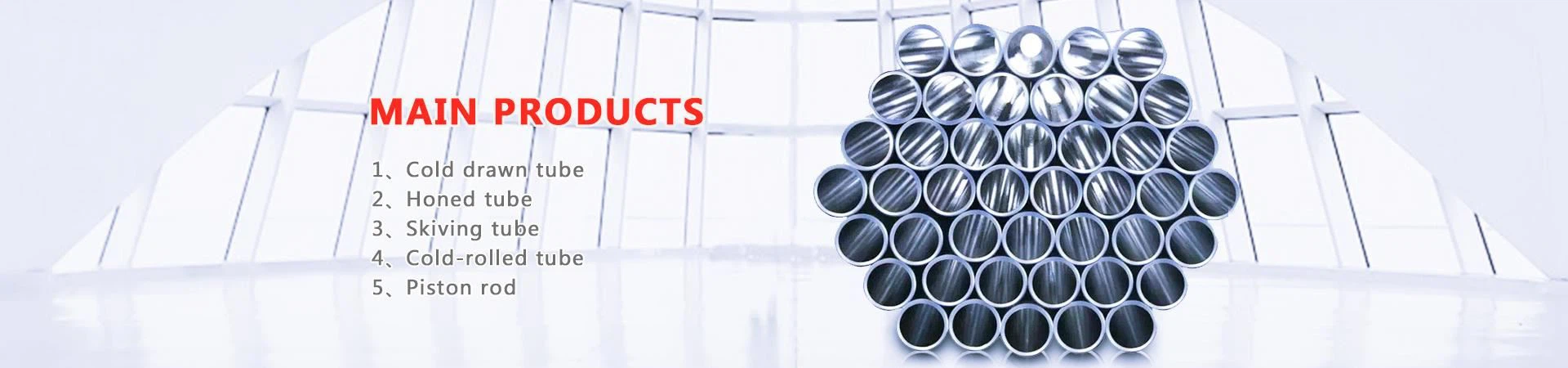
The above-mentioned change properties of the surface area of each layer of the cold drawn steel pipe during empty drawing affect the unevenness of metal deformation. One of its characteristics is that the natural extension of each layer along the pipe wall is inconsistent. The natural extension takes the outer surface layer of the cold drawn steel pipe as the smallest and the inner surface layer of the cold drawn steel pipe as the largest. The natural extension of the middle layers is from the outer surface. Layer to inner surface layer gradually increases. Cold drawn steel pipe is a common type of thick-walled seamless steel pipe. It is a special material of thick-wall steel pipe. For thick-walled cold drawn steel pipe, it is more important to protect the most basic use and play. Performance. Thick-walled cold-drawn steel pipe is an important material of cold-drawn steel pipe. Its hardness is relatively large. Generally, it is more difficult to master cutting skills and methods when cutting. In this way, thick-walled cold-drawn steel pipe can be successfully cut. Can not hurt people. In order to safely cut thick-walled cold drawn steel pipes, the following operations are recommended.
1. Mechanical cutting adopts external installation and internal installation. It uses the turning tool processing principle to cut and bevel the nozzle. The single machine has a large span, large processing thickness, less waste, no pollution, and no high temperature during processing. It does not affect the material of the pipe and is beneficial to the welding. Water cutting uses high-pressure pumps and emery to process pipelines. The cut is clean and the processing span is large, but its efficiency is low and the processing thickness is severely limited.
2. Oxygen acetylene flame cutting, by adjusting the oxygen valve and acetylene valve, the mixing ratio of oxygen and acetylene can be changed to obtain three different flames: neutral flame, oxidizing flame and carbonized flame.
3. Ion cutting, plasma cutting and different working gases can cut all kinds of metals that are difficult to cut by oxygen, especially for non-ferrous metals (stainless steel, aluminum, copper, titanium, nickel), the cutting effect is better; the main advantage is the cutting thickness When the metal is small, the plasma cutting speed is fast, especially when cutting ordinary carbon steel sheets, the speed can reach 5-6 times that of the oxygen cutting method, the cutting surface is smooth, the thermal deformation is small, and the heat affected zone is less. The second feature is that due to the relationship of integrity, each layer of cold drawn steel pipe cannot have different extensions during deformation. Therefore, each layer must restrain each other.
After air drawing, the surface area of the outer surface of the cold drawn steel pipe increases, and the surface area of the inner surface is reduced, and there must be a neutral layer between the inner and outer surface layers. After the layers between the outer surface and the neutral layer are deformed Both increase the surface area, while the outer surface layer increases the most. After the deformation of each layer between the neutral layer and the inner surface, the surface area decreases, and the inner surface decreases the most.
The above-mentioned change properties of the surface area of each layer of the cold drawn steel pipe during empty drawing affect the unevenness of metal deformation. One of its characteristics is that the natural extension of each layer along the pipe wall is inconsistent. The natural extension takes the outer surface layer of the cold drawn steel pipe as the smallest and the inner surface layer of the cold drawn steel pipe as the largest. The natural extension of the middle layers is from the outer surface. Layer to inner surface layer gradually increases. The second feature is that due to the relationship of integrity, each layer of the cold drawn steel pipe cannot have different extensions during deformation. Therefore, each layer must contain each other.
Since the metal between the outer surface and the neutral layer (called the outer layer) has a smaller natural extension than the metal between the neutral layer and the inner layer (called the inner layer), the outer layer must be dragged by the inner layer during deformation. The actual extension is larger than the natural extension, and its thickness is reduced due to the increase in extension. On the contrary, the extension of the inner layer is hindered by the outer layer, and its actual extension is smaller than the natural extension, and the thickness increases.
https://www.skivingtubelw.com


