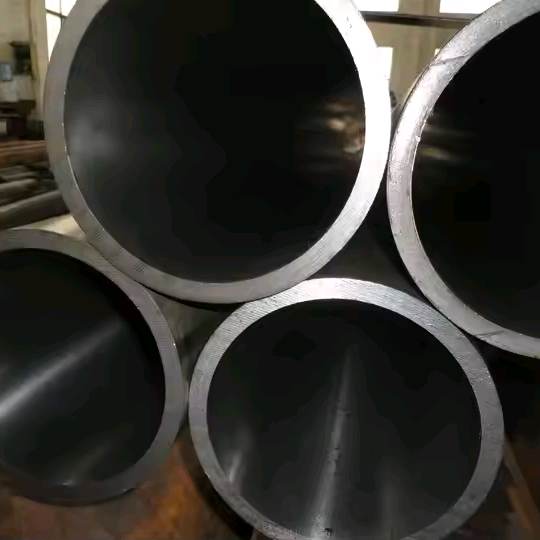
Id honing, a precision machining process, is widely recognized for its ability to improve the internal surface finish, roundness, and size accuracy of cylindrical components. As a leading id honing supplier, we often receive inquiries about the applicability of id honing to various materials, including aluminum alloys. In this blog post, we will explore the feasibility of using id honing on aluminum alloys, discussing the process, benefits, challenges, and considerations.
Understanding Id Honing
Id honing is a multi - stage process that involves the use of abrasive stones to remove small amounts of material from the inner surface of a workpiece. The honing tool rotates and reciprocates within the bore, creating a cross - hatched pattern that enhances lubrication and reduces friction. This process is commonly used in the manufacturing of engine cylinders, hydraulic cylinders, and other precision components.
Aluminum Alloys: Properties and Applications
Aluminum alloys are known for their low density, high strength - to - weight ratio, good corrosion resistance, and excellent thermal conductivity. These properties make them a popular choice in a wide range of industries, including automotive, aerospace, and marine. In the automotive industry, aluminum alloys are used in engine blocks, cylinder heads, and transmission cases. In aerospace, they are used in aircraft frames, wings, and landing gear components.
Feasibility of Id Honing on Aluminum Alloys
The answer to the question "Can id honing be used on aluminum alloys?" is a resounding yes. Id honing can be effectively used on aluminum alloys to achieve the desired surface finish, roundness, and size accuracy. However, there are some unique challenges associated with honing aluminum alloys compared to other materials such as steel.
Challenges
- Softness of Aluminum: Aluminum is a relatively soft material compared to steel. This means that the abrasive stones used in the honing process need to be carefully selected to avoid excessive material removal and surface damage. A softer abrasive grit is typically used to prevent the stones from loading up with aluminum chips, which can lead to poor surface finish and reduced tool life.
- Chip Disposal: Aluminum chips are small and can easily become trapped between the abrasive stones and the workpiece surface. This can cause scratching and other surface defects. Effective chip disposal methods, such as using a coolant with good flushing properties, are essential to ensure a high - quality honed surface.
- Thermal Expansion: Aluminum has a higher coefficient of thermal expansion than steel. During the honing process, heat is generated, which can cause the aluminum workpiece to expand. This expansion needs to be taken into account to ensure that the final dimensions of the honed bore are within the required tolerances.
Benefits
- Improved Surface Finish: Id honing can significantly improve the surface finish of aluminum alloy components. A smooth surface finish reduces friction and wear, which can improve the performance and longevity of the component. For example, in an engine cylinder, a smooth honed surface can reduce piston ring wear and improve fuel efficiency.
- Enhanced Roundness and Size Accuracy: Honing can correct any out - of - roundness or dimensional errors in the bore of an aluminum alloy component. This is crucial for components that require a high degree of precision, such as hydraulic cylinders. A precise bore ensures proper sealing and efficient operation of the hydraulic system.
- Better Lubrication: The cross - hatched pattern created by id honing provides a reservoir for lubricant, which helps to reduce friction and prevent metal - to - metal contact. This is especially important in applications where the component is subjected to high loads and speeds.
Considerations for Id Honing Aluminum Alloys
- Abrasive Selection: As mentioned earlier, the abrasive grit used in the honing process needs to be carefully selected based on the hardness of the aluminum alloy. A softer grit, such as silicon carbide or aluminum oxide, is often used to avoid excessive material removal.
- Coolant: A suitable coolant is essential for id honing aluminum alloys. The coolant helps to remove heat from the workpiece, flush away chips, and prevent the abrasive stones from loading up. Water - based coolants are commonly used, but synthetic coolants may also be used depending on the specific application.
- Machine Settings: The machine settings, such as the rotational speed, reciprocating speed, and feed rate, need to be optimized for honing aluminum alloys. These settings will depend on the size and shape of the workpiece, as well as the desired surface finish and dimensional accuracy.
Applications of Id Honed Aluminum Alloy Components
- Automotive Industry: In the automotive industry, id honed aluminum alloy components are used in engine cylinders, transmission cases, and brake calipers. The improved surface finish and dimensional accuracy of these components can enhance the performance and reliability of the vehicle.
- Aerospace Industry: In the aerospace industry, id honed aluminum alloy components are used in hydraulic systems, fuel systems, and landing gear components. The high precision and smooth surface finish of these components are critical for the safety and performance of the aircraft.
- Hydraulic Systems: Id honed aluminum alloy tubes are commonly used in hydraulic systems. These tubes provide a smooth and precise bore for the hydraulic pistons, which ensures efficient operation and proper sealing of the system. You can find more information about Hydraulic Cylinder Honed Tube Suppliers on our website.
Case Studies
Let's take a look at a few case studies to illustrate the effectiveness of id honing on aluminum alloys.
Case Study 1: Automotive Engine Cylinder
A leading automotive manufacturer was experiencing issues with piston ring wear in their aluminum alloy engine cylinders. The rough surface finish of the cylinders was causing excessive friction and premature wear of the piston rings. By using id honing to improve the surface finish of the cylinders, the manufacturer was able to reduce piston ring wear by 30% and improve fuel efficiency by 5%.
Case Study 2: Aerospace Hydraulic Component
An aerospace company was looking for a way to improve the performance of their aluminum alloy hydraulic components. The components were experiencing leakage due to poor dimensional accuracy and surface finish. After id honing the components, the company was able to achieve a significant reduction in leakage, improving the reliability and safety of the hydraulic system.
Conclusion
In conclusion, id honing can be successfully used on aluminum alloys to achieve the desired surface finish, roundness, and size accuracy. While there are some challenges associated with honing aluminum alloys, such as the softness of the material and chip disposal, these challenges can be overcome with the right abrasive selection, coolant, and machine settings.
If you are in the market for high - quality id honed aluminum alloy components, we invite you to contact us for a consultation. Our team of experts can help you determine the best honing process for your specific application and provide you with a quote. We also offer a wide range of honed tube products, including Precision Heavy Wall Seamless Honed Tube and 16Mn/25MN Precision Honing Tube.