

1045 Steel vs. C45: Understanding the Difference
When comparing medium-carbon steel grades for industrial manufacturing, buyers often encounter AISI 1045 and European C45. Many steel suppliers list them as equivalent materials, and in general engineering applications, they are often considered close alternatives.
However, 1045 and C45 are not automatically identical under every specification. Their chemical composition limits, applicable standards and delivery requirements can differ. These differences become important when a component has defined strength, hardness, machinability or heat-treatment requirements.
For hydraulic cylinder manufacturers and precision tube buyers, the comparison should go beyond the grade name. The actual steel specification, tube manufacturing route and delivered condition all need to be considered.
1. Are 1045 Steel and C45 the Same?
AISI 1045 and C45 are both medium-carbon, unalloyed engineering steels. They have a similar carbon content, generally around 0.45%, which gives them a useful balance of strength, hardness and machinability.
They are commonly used for:
Shafts and axles
Pins and mechanical components
Gears and machine parts
Hydraulic equipment components
Parts requiring induction or flame hardening
In many purchasing situations, C45 is treated as the European counterpart of AISI 1045. However, the two grades are defined by different standards.
AISI 1045 is associated with the American SAE/AISI designation system, while C45 is a European grade designation, commonly identified as material number 1.0503 under the relevant EN specification.
The important distinction is that an equivalent-grade chart indicates a material relationship, not automatic compliance with every requirement of another standard.
For example, a buyer specifying AISI 1045 under an American material specification should not accept a C45 certificate without checking whether its chemical and mechanical requirements satisfy the original order.
2. Chemical Composition: Where Do They Differ?
Chemical composition is the first point to compare when evaluating 1045 and C45.
Both grades have a similar carbon range, but their manganese and impurity limits can differ.
The following table gives representative composition ranges from commonly referenced specifications. The exact limits must be checked against the applicable standard and its revision.
| Element | AISI 1045 | C45 (1.0503) |
|---|---|---|
| Carbon (C) | 0.43–0.50% | 0.42–0.50% |
| Manganese (Mn) | 0.60–0.90% | 0.50–0.80% |
| Silicon (Si) | Depends on the specified product standard | 0.10–0.40% |
| Phosphorus (P) | Standard-dependent, commonly ≤0.040% | ≤0.045% |
| Sulfur (S) | Standard-dependent, commonly ≤0.050% | ≤0.045% |
Carbon content
Carbon is one of the main factors affecting the strength and hardenability of medium-carbon steel.
Both 1045 and C45 have a carbon range close to 0.45%. This allows them to achieve higher strength and hardness than low-carbon grades such as 1020 or 1026, depending on their delivery and heat-treatment conditions.
Manganese content
The manganese ranges are not identical.
AISI 1045 generally permits a higher upper manganese limit than C45 under the commonly referenced specifications. Manganese contributes to strength and hardenability, so the actual chemical analysis can matter when a component has a controlled heat-treatment requirement.
Phosphorus and sulfur
Phosphorus and sulfur are controlled impurities in these steels. Their limits affect material quality and can be important for demanding mechanical applications.
This is one reason why C45E should not be casually treated as identical to basic C45. C45E has tighter phosphorus and sulfur limits under its relevant European specification.
For purchasing, the practical approach is to compare the actual MTC chemical analysis with the ordered material standard rather than relying on a supplier's grade-equivalence statement.
3. Mechanical Properties: Why Delivery Condition Matters
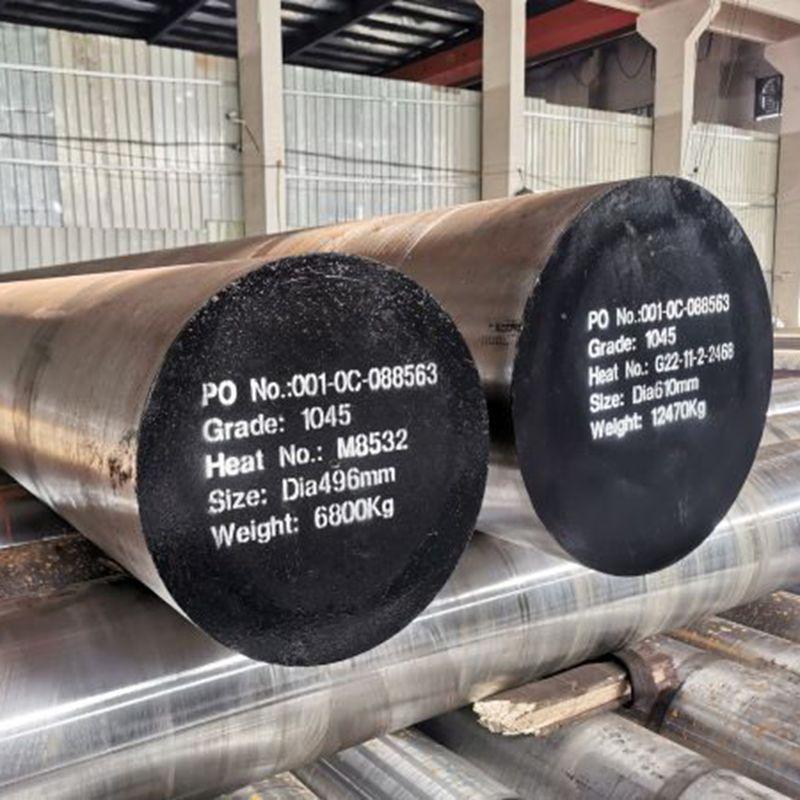
One of the most common mistakes when comparing 1045 and C45 is looking for a single tensile strength or hardness value for each grade.
Neither grade has one universal mechanical property value independent of product size and delivery condition.
Mechanical properties are affected by:
Hot-rolled or forged condition
Normalized condition
Cold-drawn condition
Annealed condition
Quenched and tempered condition
Product dimensions and section size
For example, a normalized C45 bar and a quenched-and-tempered 1045 bar may have substantially different strength and hardness, even though their basic carbon content is similar.
The same issue applies to precision steel tubes. A cold-drawn tube and a stress-relieved tube made from a similar grade should not be assumed to have identical mechanical properties.
When comparing material certificates, check the following:
Yield strength: Indicates the stress level at which permanent deformation begins under the specified test conditions.
Tensile strength: Shows the maximum tensile stress reached during the tensile test.
Elongation: Helps evaluate the material's ductility.
Hardness: Useful for assessing the material's resistance to indentation and checking consistency with the specified delivery condition.
For hydraulic cylinder tube purchasing, these values should be matched to the tube specification and intended manufacturing process. Do not transfer mechanical property values from a steel bar datasheet directly to a finished tube without checking the applicable product standard.
4. Machinability and Heat Treatment
Both 1045 and C45 offer good machinability in suitable delivery conditions. They are commonly selected for components that need more strength than low-carbon steel but do not require the higher alloy content of grades such as 42CrMo4.
Typical machining operations include turning, milling, drilling and other conventional metal-cutting processes.
However, machining performance depends on the material's actual hardness and microstructure. A normalized material may behave differently from a cold-drawn or quenched-and-tempered product.
Heat treatment
Both grades can be normalized, annealed, quenched and tempered, or surface hardened when the design and material dimensions allow.
Induction hardening is particularly relevant for components such as shafts and guide elements that require a harder surface while retaining a tougher core.
However, 1045 and C45 are medium-carbon steels with limited through-hardening capability compared with alloy steels. The achievable hardness distribution depends on section size, heating conditions, quenching method and tempering parameters.
If a component requires high through-hardness or more consistent hardening in a large section, a suitable alloy steel may need to be considered instead.
Welding considerations
Neither grade should be treated as an easy-to-weld low-carbon steel.
Their carbon content increases the risk of hard microstructures and cracking in the heat-affected zone. Welding procedures may require preheating, controlled heat input and appropriate post-weld treatment.
If a hydraulic cylinder barrel or related component involves welding, confirm the material's weldability with the design and welding teams before selecting the grade.
5. 1045 vs. C45 for Hydraulic Cylinder Tube Applications
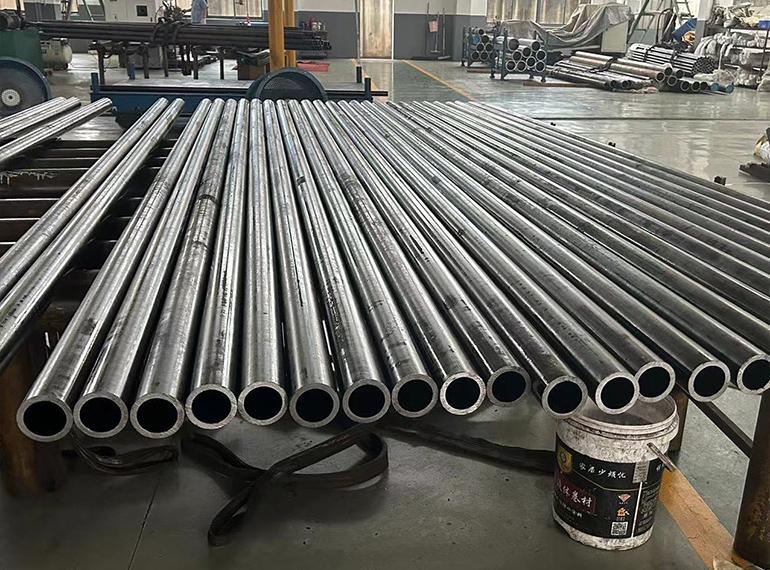
For hydraulic cylinder manufacturers, material selection is only one part of tube purchasing. The tube must also meet the dimensional and internal surface requirements of the cylinder design.
Both 1045 and C45 may be encountered in precision tube and hydraulic cylinder barrel supply chains. Their suitability depends on the required mechanical properties, manufacturing route and final condition.
When 1045 may be specified
AISI 1045 can be considered when the design or purchasing specification is based on American material requirements.
It may be appropriate for mechanical components and certain precision tube applications where its chemical composition and delivered properties meet the design requirements.
However, specifying 1045 alone does not define the tube's bore tolerance, straightness, wall thickness or surface finish.
When C45 may be specified
C45 is commonly used in European engineering specifications. Buyers may encounter it in machinery components and precision steel products where the EN material designation is required.
If the drawing specifies C45, the supplier should confirm the exact standard, material number and delivery condition rather than simply quoting a product described as 1045 equivalent.
What matters for the finished tube?
For a hydraulic cylinder barrel, the following requirements can be just as important as the material grade:
Inside diameter and tolerance
Outside diameter and wall thickness
Bore roundness and straightness
Internal surface roughness
Tube length and end preparation
Mechanical properties in the delivered condition
Material traceability and inspection records
A tube made from the correct grade can still be unsuitable if its bore geometry or surface condition does not meet the cylinder manufacturer's requirements.
The material grade and the finished tube specification should therefore be reviewed together.
6. Can 1045 Replace C45?
In many general engineering applications, 1045 can be considered as a potential alternative to C45. However, the substitution should be approved against the actual specification rather than based only on a grade-equivalence table.
Before accepting a substitution, check these five points.
1. Chemical composition
Compare the carbon, manganese, silicon, phosphorus and sulfur limits. Confirm that the actual heat analysis meets the requirements of the target specification.
2. Mechanical properties
Check the required yield strength, tensile strength, elongation and hardness in the specified delivery condition.
3. Product standard
A steel bar standard and a steel tube standard do not necessarily impose the same requirements. Confirm that the proposed material standard covers the actual product form being purchased.
4. Heat-treatment requirements
If the component is normalized, quenched and tempered or induction hardened, confirm that the alternative grade can meet the required properties under the approved process.
5. Customer and drawing approval
If the material is specified on an approved drawing or customer-controlled specification, obtain written approval before changing the grade.
A substitution that works for a general shaft may not be acceptable for a hydraulic cylinder barrel with defined mechanical and dimensional requirements.
7. What Should Buyers Check on the Material Test Certificate?
The material test certificate is the most useful document for confirming what material was actually supplied.
When purchasing 1045 or C45 precision tubes, review the following information:
| MTC item | What to verify |
|---|---|
| Material designation | 1045, C45 or another approved grade |
| Governing standard | Correct standard and applicable revision |
| Heat number | Traceable to the delivered batch |
| Chemical analysis | Actual composition within specified limits |
| Mechanical test results | Compliance with the ordered delivery condition |
| Heat-treatment condition | Matches the purchase specification |
| Product identification | Tube dimensions and batch identification |
| Inspection records | Additional tests required by the order |
If the supplier offers C45 as an alternative to 1045, ask for the actual MTC before approving the substitution.
A catalogue showing both names on the same product page is not enough to establish that the delivered material meets your technical requirements.
8. How to Specify 1045 or C45 in an RFQ
A clear RFQ helps avoid misunderstandings between the buyer and supplier.
Instead of writing only "1045/C45 hydraulic tube," include the following details:
Material grade and governing standard
Seamless or welded manufacturing requirement
Delivery condition
Inside diameter and tolerance
Outside diameter and wall thickness
Tube length and quantity
Required mechanical properties
Bore surface finish and geometry
Inspection and certification requirements
For example, a buyer may request:
Product: Precision seamless hydraulic cylinder tube
Material: AISI 1045 to the specified material standard
Delivery condition: To be agreed according to the machining and heat-treatment requirements
Dimensions: ID, OD, wall thickness and length according to the approved drawing
Bore condition: Skived and roller burnished, with specified ID tolerance and surface roughness
Documents: Material test certificate and dimensional inspection report
Additional requirement: Please identify any proposed material substitution or deviation from the requested specification.
If the project is designed around C45, replace the material designation and standard accordingly. Avoid listing 1045 and C45 together as unrestricted alternatives unless the engineering team has approved both.
9. Choosing the Right Precision Tube Supplier
For buyers sourcing 1045 or C45 precision tubes, a supplier should be able to explain not only the material designation but also how the tube will be manufactured and inspected.
At Wuxi LongWei Precision Tube Co., Ltd., our production capabilities include high-precision hydraulic cold drawing, skiving and roller burnishing, honing, straightening and inspection. Our 9 m SRB machine supports the processing of long hydraulic cylinder tubes, and our stated tube diameter range is 40–500 mm.
When requesting a quotation, provide the material grade, applicable standard, tube dimensions, delivery condition and bore requirements. If you are considering replacing C45 with 1045 or vice versa, include the relevant material specification or certificate so that the requirements can be reviewed before production.
The right material is not simply the one with the closest grade name. It is the one that meets the required standard, mechanical properties and finished tube specifications.


