

When manufacturing hydraulic cylinder tubes, achieving the correct inner diameter is only part of the job. The bore must also have a consistent surface finish, good roundness, and sufficient dimensional accuracy to support smooth piston movement and reliable seal operation.
This is where the Skiving and Roller Burnishing (SRB) process becomes important.
SRB combines two different machining operations: skiving removes excess material from the inner wall of a steel tube, while roller burnishing improves the surface through controlled plastic deformation. Both operations can be integrated into one production cycle, making SRB an efficient finishing method for hydraulic cylinder tubes.
However, the final result depends on more than the machine itself. Incoming tube quality, machining allowance, tool condition, cutting parameters, and inspection procedures all affect the finished product.
1. Why Are Skiving and Roller Burnishing Used Together?
A cold-drawn seamless steel tube may already have a relatively accurate inner diameter, but its bore surface and dimensional condition may still need further processing before it can be used as a hydraulic cylinder barrel.
Drawing marks, local diameter variations, and surface irregularities can affect the contact between the piston seals and the cylinder wall.
If the bore is not properly finished, manufacturers may encounter problems such as:
Uneven seal contact caused by variations in the inner diameter.
Premature seal wear due to surface irregularities.
Unstable piston movement caused by poor bore geometry.
Oil leakage when the sealing surface does not meet the required specifications.
Inconsistent cylinder performance between production batches.
Simply cutting the inner diameter to the required size does not necessarily produce a suitable sealing surface.
SRB addresses these requirements through two complementary operations. Skiving establishes the bore dimensions and geometry, while roller burnishing improves the surface condition.
2. How Does the Skiving Process Work?
Skiving is the material-removal stage of SRB processing.
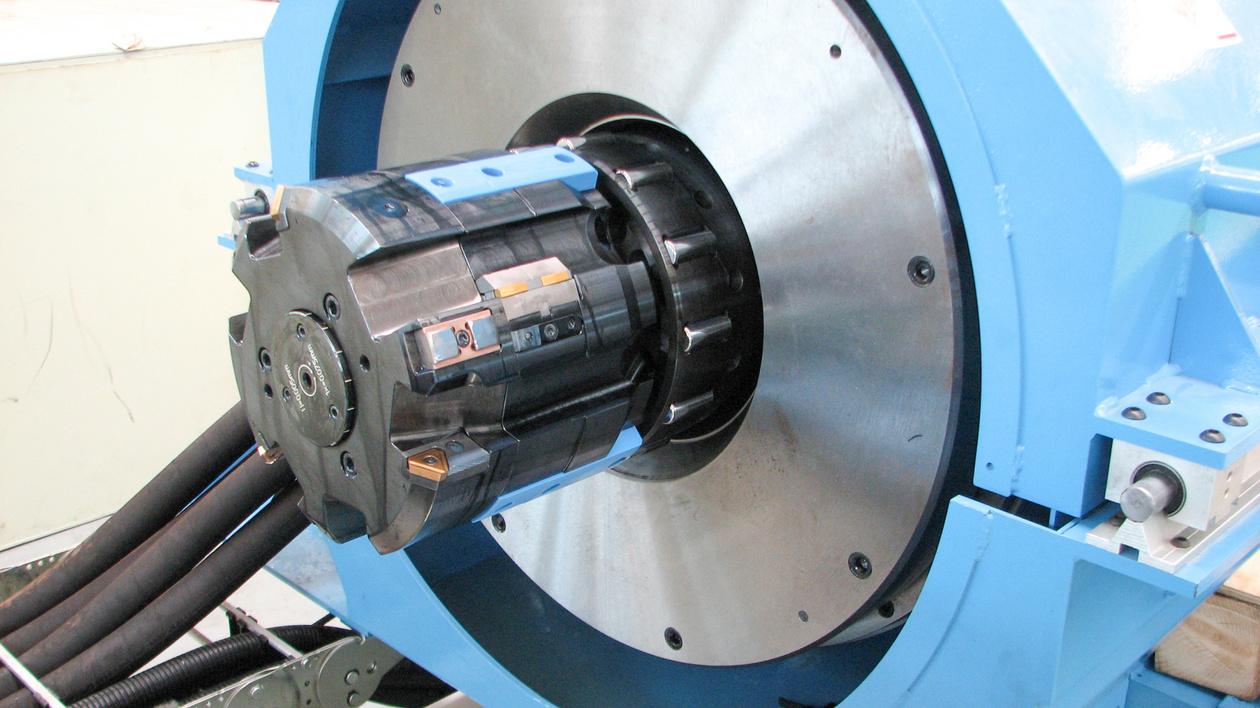
A specialized skiving head, fitted with precision cutting inserts, enters the steel tube and moves through its internal bore. As the tool rotates and advances along the tube, the cutting edges remove a controlled layer of material from the inner wall.
The purpose is not simply to enlarge the bore. The operation must bring the internal diameter closer to its specified final dimensions while controlling the bore geometry.
During skiving, several factors need attention:
Cutting depth: The amount of material removed must match the available machining allowance. If the original bore does not have sufficient allowance, the skiving operation may fail to remove existing surface defects completely.
Tool alignment: The skiving head must remain properly positioned during machining. Poor alignment can contribute to uneven cutting and dimensional variation along the tube.
Cutting insert condition: Worn or damaged inserts may leave irregular machining marks, affect the bore diameter, and reduce process consistency.
Coolant and chip removal: Metal chips must be carried away effectively. Poor chip evacuation can cause scratches, interfere with tool movement, or damage the newly machined surface.
After skiving, the bore has the required machining geometry, but its surface still contains fine cutting marks. This is why the next operation is necessary.
3. How Does Roller Burnishing Improve the Inner Surface?
Roller burnishing is a cold-forming process rather than another conventional cutting operation.
After skiving, hardened rollers come into contact with the newly machined inner surface. Under controlled radial pressure, the rollers move along the bore and plastically deform the microscopic surface peaks.
Instead of removing more material, the rollers press and redistribute the surface irregularities, producing a smoother and more uniform finish.
This operation provides several benefits:
Lower surface roughness: Roller burnishing reduces the height of surface peaks, producing a smoother bore that is suitable for hydraulic cylinder sealing applications.
Surface work hardening: The contact pressure introduces localized plastic deformation and can increase the hardness of the near-surface material.
Improved surface consistency: Properly controlled roller pressure and tool movement help create a more uniform internal finish along the tube.
Dimensional adjustment: The burnishing operation can also influence the final bore diameter. Its effect must be considered when setting the skiving allowance and roller expansion.
One important point for hydraulic cylinder manufacturers is that a smoother surface is not automatically suitable for every sealing system. Surface roughness, surface profile, seal material, lubrication conditions, and operating requirements should be considered together.
4. What Happens During the Complete SRB Production Process?
For precision hydraulic cylinder tubes, the SRB operation should be treated as part of a complete manufacturing and inspection sequence.
A typical production route includes the following stages.
Step 1: Incoming Tube Inspection
Before machining, the manufacturer checks the incoming seamless steel tube.
Important inspection items include:
Original inner and outer diameters.
Wall thickness and wall thickness variation.
Tube straightness.
Initial bore condition.
Material grade and material documentation.
This step matters because SRB is not designed to correct every defect in an unsuitable raw tube. Excessive ovality, poor straightness, or uneven wall thickness can affect the machining result.
Step 2: Tube Positioning and Machine Setup
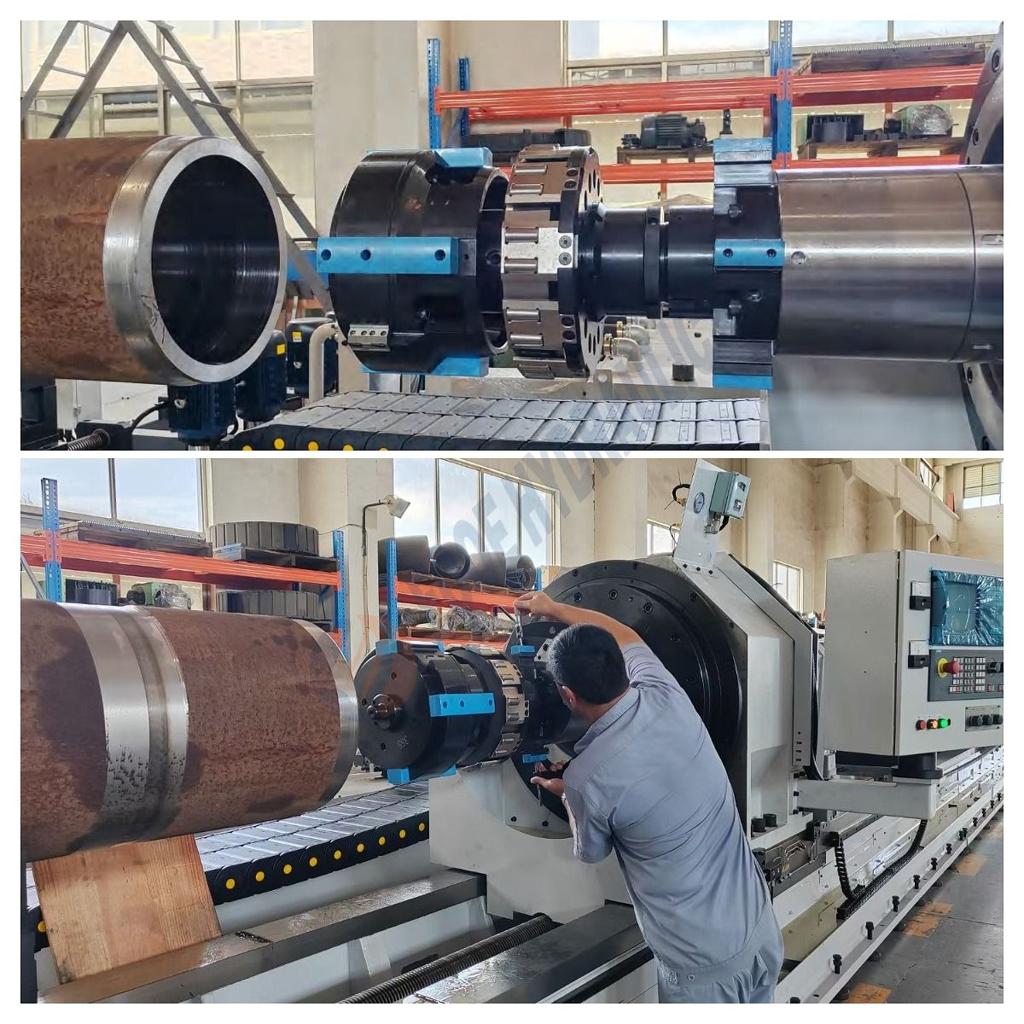
The tube is positioned and supported on the SRB machine.
Clamping and support arrangements must prevent excessive movement or deformation during processing. This is particularly important for long tubes and thin-walled sections.
The operator also selects suitable tooling and machining parameters according to the tube dimensions, material condition, and required finished bore.
Step 3: Internal Skiving
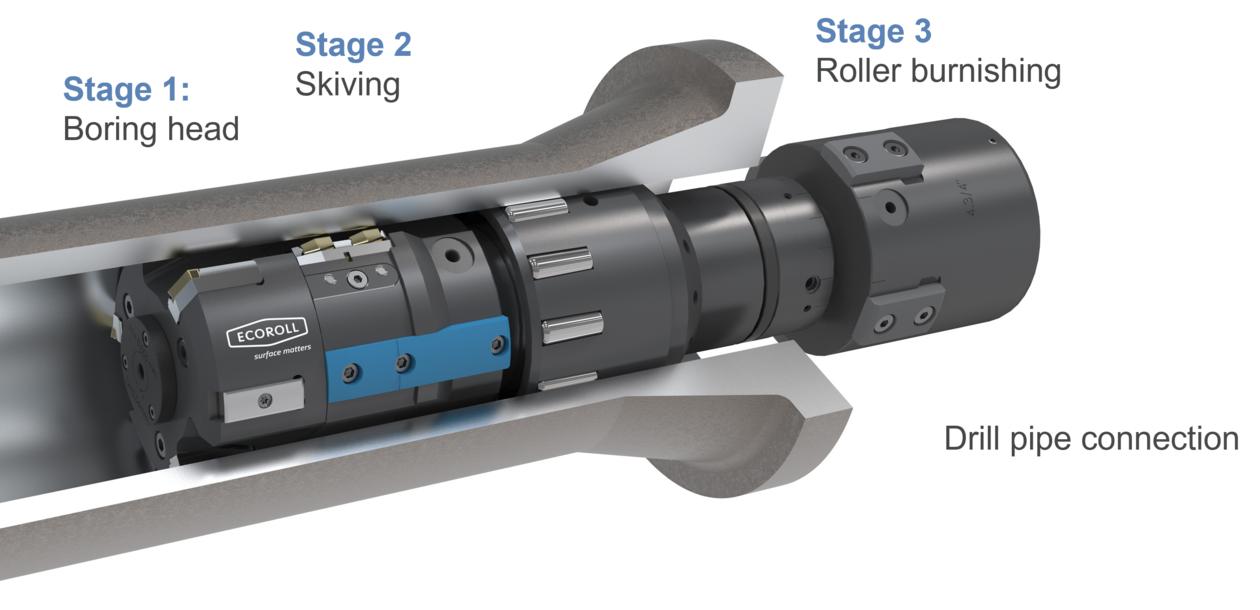
The skiving head removes the required machining allowance from the inner wall.
The cutting operation establishes the bore dimensions and prepares the surface for roller burnishing.
Step 4: Roller Burnishing
The hardened rollers apply controlled pressure to the machined surface.
Depending on the machine and tool configuration, skiving and roller burnishing may take place simultaneously during one pass or in separate forward and return operations.
Both arrangements are used in industrial SRB processing. The actual production sequence depends on the equipment and tooling design.
Step 5: Final Cleaning and Inspection
After machining, the tube must be cleaned to remove residual chips, coolant, and other contaminants.
The finished bore is then checked against the agreed product specifications.
Typical inspection items include inner diameter, dimensional variation, roundness, straightness, and internal surface roughness.
A tube that looks smooth from the outside is not necessarily a qualified hydraulic cylinder tube. Internal dimensional and surface measurements are essential.
5. What Factors Affect the Quality of an SRB Tube?
In actual production, several issues can prevent an SRB tube from meeting customer requirements. Understanding these factors helps buyers evaluate a supplier's manufacturing capability.
| Production factor | Possible quality impact |
|---|---|
| Uneven incoming wall thickness | May contribute to bore eccentricity and dimensional variation |
| Insufficient machining allowance | Existing surface defects may remain after skiving |
| Worn cutting inserts | Irregular cutting marks and unstable bore dimensions |
| Incorrect roller pressure | Inconsistent surface finish or excessive dimensional change |
| Poor tube support | Vibration, bending, or deformation during machining |
| Inadequate chip removal | Scratches and damage to the finished bore |
| Insufficient cleaning | Residual chips or coolant contamination |
For example, if a tube has uneven wall thickness before machining, simply increasing the roller pressure will not solve the underlying problem. The incoming material condition and machining strategy must be reviewed first.
Similarly, if the finished bore diameter is outside tolerance, the manufacturer should investigate the original bore size, cutting insert condition, tool setting, clamping deformation, and burnishing parameters rather than relying on repeated surface finishing.
6. How Should Buyers Check the Quality of SRB Tubes?
When purchasing skived and roller burnished tubes, buyers should request measurable quality information instead of relying only on descriptions such as smooth surface or high precision.
The following parameters deserve particular attention.
1. Inner Diameter (ID)
Check whether the actual bore diameter meets the drawing requirements. For hydraulic cylinder applications, the specified tolerance is often H8 or H9, depending on the design and manufacturing requirements.
2. Surface Roughness (Ra)
Ask for the specified Ra value and the actual inspection results. SRB tubes commonly achieve very fine surface finishes, but the required value should be confirmed for the particular product and production process.
3. Roundness
An acceptable average inner diameter does not guarantee that the bore is sufficiently round. Excessive ovality may affect piston clearance and seal contact.
4. Straightness
Long hydraulic cylinder tubes need appropriate straightness to support proper assembly and piston movement. Check the specified straightness tolerance rather than assuming that a smooth bore guarantees a straight tube.
5. Surface Condition
The internal surface should be checked for scratches, visible machining defects, local damage, and other irregularities that could affect sealing performance.
6. Inspection Documentation
For repeat orders and production projects, request dimensional inspection records and material certificates where required. These documents help confirm whether the delivered tubes match the agreed specifications.
A practical purchasing approach is to provide the supplier with the finished inner diameter, tube length, wall thickness, material grade, tolerance, surface roughness, and straightness requirements before production begins.
This allows the manufacturer to evaluate the machining allowance, tooling selection, and inspection plan in advance.
7. Is SRB Better Than Honing for Hydraulic Cylinder Tubes?
Not in every application. Both SRB and honing can produce precision internal surfaces, but they use different finishing principles.
| Comparison | SRB Tube | Honed Tube |
|---|---|---|
| Main process | Cutting followed by roller burnishing | Abrasive stone finishing |
| Material removal | Controlled cutting during skiving | Abrasive material removal |
| Surface formation | Smooth surface through plastic deformation | Cross-hatch or other honing patterns |
| Production efficiency | Generally suitable for higher-volume production | Often involves multiple finishing strokes |
| Process consideration | Requires suitable incoming bore geometry and machining allowance | Can offer flexibility for correcting certain bore conditions |
| Typical application | Hydraulic cylinder tubes requiring efficient, repeatable finishing | Hydraulic cylinders with specific surface pattern or geometry requirements |
SRB is often selected when manufacturers need efficient processing, consistent bore dimensions, and a smooth internal surface across production batches.
Honing remains a suitable option when the application requires a particular cross-hatch pattern, additional bore correction, or a specific surface finish.
The correct choice depends on cylinder design, seal requirements, lubrication conditions, production volume, and the customer's technical specifications.
8. What Information Should You Provide When Ordering SRB Tubes?
One common source of production delays is incomplete technical information at the quotation stage.
For a more accurate assessment, buyers should provide:
Material grade and applicable standard.
Finished inner diameter and tolerance.
Outer diameter or wall thickness.
Tube length and length tolerance.
Required surface roughness (Ra).
Straightness and roundness requirements.
Quantity and intended application.
Any special inspection or documentation requirements.
If you only provide an outer diameter and length, the manufacturer may not have enough information to determine whether the existing tube can be processed to the required internal dimensions.
A technical drawing is particularly useful when the tube has tight dimensional requirements or is intended for a specific hydraulic cylinder design.
Conclusion
Skiving and roller burnishing work together to produce precision internal surfaces for hydraulic cylinder tubes. Skiving controls material removal and establishes the bore geometry, while roller burnishing improves surface smoothness through controlled plastic deformation.
However, consistent SRB tube quality starts before the machining operation. Incoming tube condition, machining allowance, equipment setup, tool condition, and final inspection all influence the finished product.
For hydraulic cylinder manufacturers, choosing an SRB tube supplier should therefore involve more than comparing prices or advertised surface roughness. The supplier's ability to control the complete machining process and verify the finished dimensions is equally important.
Looking for precision SRB tubes for hydraulic cylinder production? Wuxi LongWei Precision Tube Co., Ltd. provides skived and roller burnished tube solutions, supported by a 9-meter SRB machine, precision cold drawing equipment, and professional inspection facilities. Contact our team with your tube dimensions and technical requirements to discuss a suitable production solution.


