

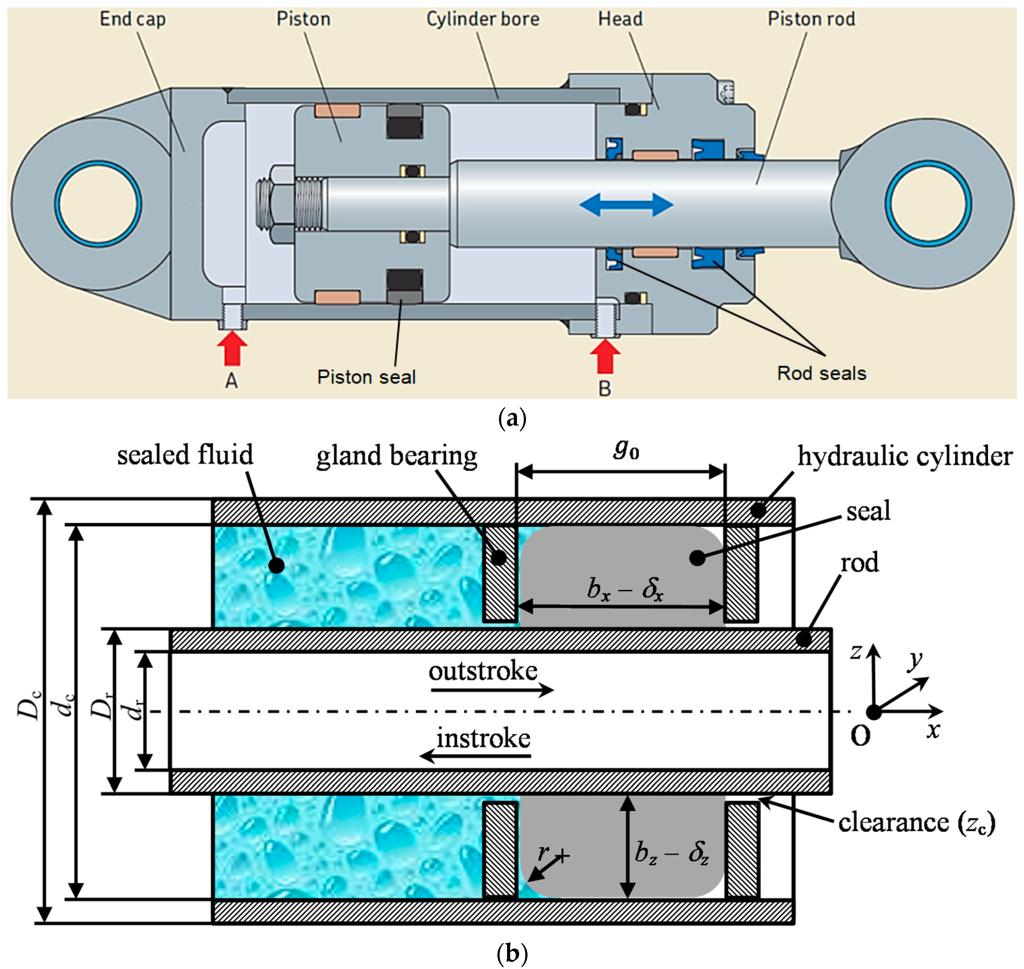
A hydraulic cylinder may operate under high pressure and repeated movement, but many performance problems start with something less obvious: the quality of the cylinder bore.
The inner surface of the cylinder tube is where the piston seals move throughout the working cycle. If the bore has inconsistent dimensions, excessive surface roughness, or poor roundness, the result may be uneven seal contact, increased friction, premature wear, or oil leakage.
For this reason, hydraulic cylinder manufacturers often choose Skived and Roller Burnished Tubes (SRB Tubes) instead of using standard cold-drawn tubes without additional internal finishing.
SRB tubes combine accurate bore machining with controlled surface finishing. They are particularly suitable for hydraulic cylinder production where repeatable internal dimensions, a smooth sealing surface, and efficient manufacturing are important.
But what makes them a practical choice, and when does the additional processing actually benefit your production?
1. Better Bore Quality for Hydraulic Cylinder Assembly
The inner diameter of a hydraulic cylinder tube must match the piston and sealing system. A tube that meets the nominal diameter requirement but has excessive local variation may still create assembly and operating problems.
For example, if the bore is slightly oversized in some sections and undersized in others, the piston may not maintain consistent clearance throughout its stroke. This can affect seal contact and increase the risk of uneven wear.
SRB processing helps address this issue through two complementary operations:
Skiving removes a controlled amount of material from the inner wall to establish the required bore dimensions.
Roller burnishing presses the microscopic surface peaks, improving surface smoothness and helping achieve a consistent finished bore.
The result is a precision-finished internal surface that can be manufactured to specified dimensional tolerances.
For hydraulic cylinder manufacturers, this means fewer uncertainties when matching the tube with piston dimensions and sealing components.
2. A Smoother Bore Helps Protect Piston Seals
Piston seals remain in continuous contact with the cylinder bore during operation. The condition of this contact surface directly affects sealing behavior and component wear.
If the inner wall contains sharp machining marks, scratches, or excessive surface irregularities, the moving seal may experience increased friction and localized wear.
Roller burnishing improves the surface by reducing microscopic peaks and creating a smoother contact surface.
This offers several practical advantages:
Reduces abrasive contact between the bore and piston seals.
Helps maintain more consistent seal contact.
Supports smooth piston movement during repeated operating cycles.
Reduces the risk of premature seal damage caused by unsuitable surface conditions.
However, smoother does not always mean better. A hydraulic cylinder bore must have the correct surface texture for its seal material and lubrication conditions. Excessively smooth surfaces may not provide the desired lubricant retention in certain designs.
Therefore, the target surface roughness should be agreed upon according to the hydraulic seal manufacturer's recommendations and the cylinder's operating requirements.
3. More Consistent Piston Movement
In hydraulic equipment, the piston needs to travel smoothly through the full cylinder stroke.
Poor bore geometry can create uneven clearance between the piston assembly and the cylinder wall. Depending on the cylinder design, this may contribute to inconsistent friction, localized seal loading, or unstable movement.
The skiving operation helps establish the internal diameter and bore geometry, while roller burnishing improves the surface finish.
When the incoming tube condition and machining parameters are properly controlled, SRB processing can produce a consistent internal surface along the working length of the cylinder tube.
This is particularly important for:
Long-stroke hydraulic cylinders.
Construction machinery cylinders.
Agricultural equipment cylinders.
Industrial hydraulic cylinders.
Hydraulic lifting and material-handling systems.
For manufacturers producing cylinders in batches, consistent bore quality also helps reduce variation during assembly.
4. Higher Production Efficiency for Cylinder Manufacturers
Production efficiency is another important reason why many hydraulic cylinder manufacturers use SRB tubes.
Traditional honing relies on abrasive stones to remove material from the internal bore. Depending on the required dimensions and surface finish, the process may involve multiple finishing strokes.
SRB combines skiving and roller burnishing into an efficient machining sequence. In common industrial configurations, both operations can be completed during one pass through the tube.
This can reduce internal finishing time and simplify production planning, particularly when manufacturing large quantities of similar cylinder tubes.
The practical benefits include:
Shorter machining cycles: The combined process can reduce the time needed to finish each tube compared with conventional multi-pass honing operations.
More predictable production: Once the machining parameters and tooling are established, repeat production can maintain consistent processing conditions.
Reduced secondary processing: When the incoming tube and SRB process are suitable, additional bore finishing may not be necessary.
Better production planning: A repeatable finishing process helps manufacturers organize tube preparation and subsequent cylinder assembly more efficiently.
The actual productivity advantage depends on tube dimensions, material, production quantity, equipment configuration, and required inspection standards. SRB is particularly attractive for OEM manufacturers with regular production runs.
5. Improved Surface Hardness Through Roller Burnishing
Unlike conventional cutting or grinding, roller burnishing is a cold-forming process.
The rollers apply controlled pressure to the inner surface, causing localized plastic deformation. This can produce work hardening in the near-surface material.
For hydraulic cylinder tubes, this is an additional benefit of the SRB process.
A work-hardened surface may offer improved resistance to localized surface deformation and wear under suitable operating conditions.
However, it is important to distinguish between surface hardness and overall tube strength. Roller burnishing does not replace the need to select the correct steel grade, wall thickness, heat treatment, or mechanical properties for the cylinder's working pressure.
For demanding applications, buyers should evaluate the finished tube according to the actual mechanical and operating requirements rather than assuming that burnishing alone guarantees longer service life.
6. More Economical for Repetitive Hydraulic Cylinder Production
When comparing tube costs, the purchase price per meter is only one part of the calculation.
Hydraulic cylinder manufacturers also need to consider the additional machining time, tooling consumption, labor, inspection, and production capacity required to prepare the bore.
If a manufacturer purchases unfinished cold-drawn tubes, the internal finishing operation must be arranged separately.
By purchasing tubes that have already undergone SRB processing, manufacturers can reduce the amount of internal finishing work required in their own facilities.
This can be particularly useful when:
The factory produces hydraulic cylinders in regular batches.
Internal honing capacity is limited.
The required bore specifications can be achieved through SRB.
Production scheduling requires shorter tube preparation time.
The manufacturer wants to reduce the number of machining operations.
For large and repeat orders, the total manufacturing cost per cylinder may be more important than the initial difference in tube prices.
Buyers should therefore compare the complete processing cost rather than evaluating SRB tubes and untreated cold-drawn tubes solely by their material price.
7. SRB Tube vs. Standard Cold Drawn Tube: What Is the Difference?
A standard cold-drawn tube and an SRB tube are not interchangeable in terms of their finished internal condition.
Cold drawing improves dimensional accuracy and mechanical properties compared with many conventional hot-finished tubes. However, the internal bore may still require additional finishing for hydraulic cylinder applications.
SRB adds this finishing stage.
| Comparison | Standard Cold Drawn Tube | SRB Tube |
|---|---|---|
| Manufacturing process | Cold drawing | Cold drawing followed by skiving and roller burnishing |
| Inner diameter | Depends on drawing specification | Further machined to the required bore size |
| Inner surface | Drawing surface condition | Smoothed by roller burnishing |
| Bore tolerance | Depends on original tube specification | Controlled according to finished tube specification |
| Surface work hardening | Depends on drawing and heat treatment | Additional work hardening from burnishing |
| Hydraulic cylinder use | May require further internal finishing | Suitable for direct use when specifications are met |
The important distinction is that an SRB tube is a further-processed precision tube, not simply another name for a cold-drawn seamless steel tube.
8. When Should You Choose SRB Tubes Instead of Honed Tubes?
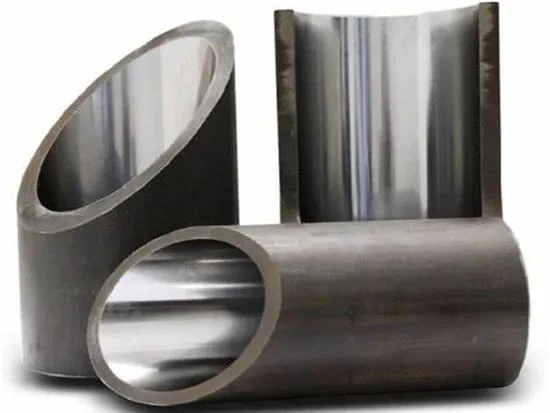
SRB and honed tubes are both widely used in hydraulic cylinder manufacturing. The choice should depend on the cylinder's functional requirements and production conditions.
| Selection factor | SRB Tube | Honed Tube |
|---|---|---|
| Finishing method | Skiving and roller burnishing | Abrasive honing |
| Bore surface | Smooth, burnished surface | Honed surface, typically with cross-hatch texture |
| Production efficiency | Often advantageous for repetitive production | Depends on bore size and honing requirements |
| Bore correction | Depends on incoming tube geometry and machining allowance | Offers greater flexibility for certain bore corrections |
| Surface texture | No conventional honing cross-hatch | Cross-hatch pattern can support lubricant retention |
| Typical selection | High-volume cylinder tube production | Applications requiring a specific honed surface texture or additional geometry correction |
For many standard hydraulic cylinder applications, SRB tubes are an efficient choice when the required bore dimensions and surface characteristics can be achieved consistently.
Honed tubes may be preferable when the cylinder design specifically requires a cross-hatch surface, or when the existing bore needs additional geometric correction.
Neither process is universally superior. The correct option should be determined by the piston seal design, lubrication conditions, bore geometry, and production requirements.
9. What Should You Check Before Purchasing SRB Tubes?
A supplier's description of high precision or smooth surface quality is not enough to confirm whether a tube is suitable for your hydraulic cylinder.
Before placing an order, make sure the following specifications are clearly defined.
Inner Diameter and Tolerance
Confirm the finished bore size and tolerance. H8 and H9 are commonly encountered in precision cylinder tube specifications, but the actual requirement should follow your cylinder drawing.
Surface Roughness
Specify the required Ra value and, where necessary, other surface texture parameters. The target must be compatible with the selected piston seal.
Roundness and Straightness
Check both parameters, especially for long-stroke cylinders and applications requiring accurate piston guidance.
Material Grade
Confirm the steel grade and applicable material standard. Common choices include E355, ST52, and other grades specified by the cylinder design.
Wall Thickness
Make sure the tube wall thickness is suitable for the cylinder's design pressure and structural requirements.
Inspection Records
Ask for dimensional inspection results and material certificates where required. For repeat orders, consistent inspection criteria are important for controlling batch-to-batch variation.
Providing a technical drawing is often the most effective way to avoid misunderstandings. It allows the supplier to confirm whether the required inner diameter, outer diameter, wall thickness, length, and finishing specifications can be achieved together.
Conclusion
Skived and roller burnished tubes offer several practical advantages for hydraulic cylinder manufacturers. They provide a precision-finished bore, a smooth internal surface, and an efficient manufacturing route for repetitive cylinder production.
More importantly, their value is not limited to surface appearance. Properly specified and manufactured SRB tubes help cylinder producers control bore quality, protect sealing components, and reduce additional internal machining work.
However, the right tube must always match the cylinder design. Bore tolerance, surface texture, roundness, material grade, and wall thickness should all be considered before making a purchasing decision.
Wuxi LongWei Precision Tube Co., Ltd. specializes in precision seamless steel tubes for hydraulic and industrial applications. With a 9-meter SRB machine, hydraulic cold drawing equipment, and CNC honing facilities, LongWei supports the production of precision tubes with inner diameters from 40 mm to 500 mm.
If you are sourcing SRB tubes for hydraulic cylinder manufacturing, send us your required dimensions, material grade, and technical drawing. Our team can help evaluate the appropriate tube specifications and processing requirements.


