

The inner surface of a steel tube plays an important role in applications where components move or seal against the bore. In hydraulic cylinders, for example, the piston seal travels along the tube's internal surface during every operating cycle. Surface roughness, bore dimensions and surface consistency can all affect friction, seal wear and cylinder performance.
Roller burnishing is a mechanical finishing process used to improve this internal surface. Instead of removing material with an abrasive or cutting edge, it uses hardened rollers to apply controlled pressure to the bore. This pressure causes localized plastic deformation, reducing surface peaks and producing a smoother finish.
For hydraulic cylinder tubes, roller burnishing is commonly combined with skiving. Skiving establishes the bore dimensions, while roller burnishing improves the surface condition. Understanding how these two operations work together helps buyers evaluate SRB tubes and specify the right finishing requirements.
1. What Is Roller Burnishing?
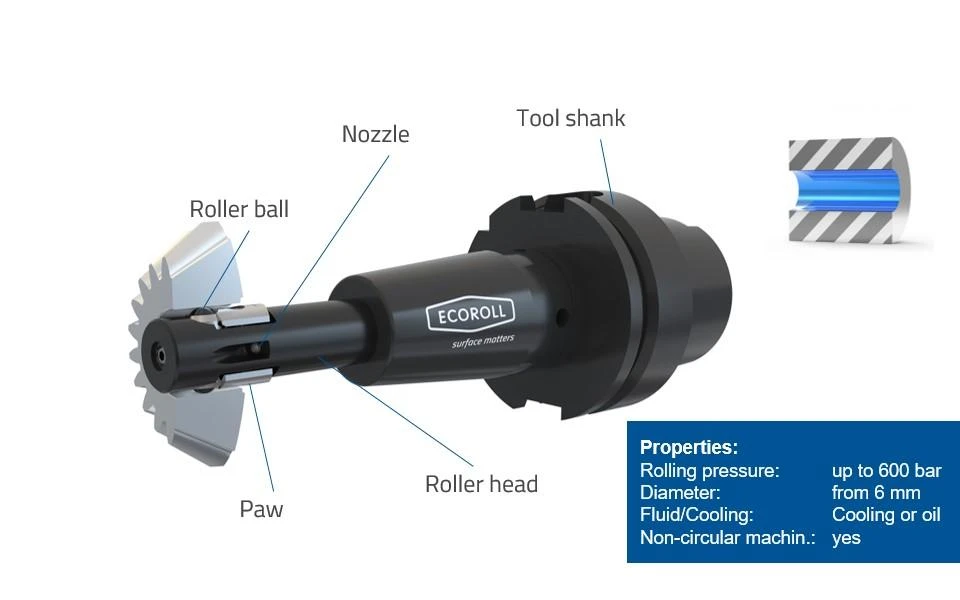
Roller burnishing is a non-cutting surface finishing process. A tool fitted with hardened rollers moves through or along a machined surface while applying controlled pressure.
For internal steel tube machining, the roller head is positioned inside the bore. As the tool moves through the tube, its rollers make contact with the internal surface and compress the surface material.
The pressure is sufficient to deform the small surface irregularities plastically. Higher points in the surface profile are flattened, and displaced material flows into nearby lower areas.
Unlike grinding or honing, roller burnishing does not rely on abrasive particles to remove material. It changes the surface profile through mechanical deformation.
The process can improve:
Internal surface roughness
Surface-layer hardness
Dimensional consistency, when properly controlled
Surface compressive residual stress
These improvements depend on the material, initial surface condition, tool design and process parameters. They should not be assumed without checking the finished tube.
2. How Does Roller Burnishing Change the Inner Surface?
To understand the effect of roller burnishing, it helps to look at what happens to a machined steel surface before and after the rollers pass through the bore.
A surface produced by cutting contains microscopic peaks and valleys. Even when the bore diameter is accurate, small tool marks and surface irregularities remain.
During roller burnishing, the hardened rollers press against these irregularities. The contact pressure exceeds the local yield strength of the surface material, causing permanent deformation in the surface layer.
The higher peaks become flatter, while the displaced material moves into adjacent valleys. This reduces the height of the surface profile and creates a smoother internal finish.
The process can be understood in three stages:
Before burnishing: The machined bore contains surface peaks, valleys and tool marks.
During burnishing: The rollers apply localized pressure, causing the surface peaks to deform plastically.
After burnishing: The surface profile becomes more level, with reduced roughness and a modified near-surface material condition.
This mechanism is the reason roller burnishing can achieve a fine surface finish without removing another layer of steel. The process is described in technical references from Baublies and ASM International.
3. How Does Roller Burnishing Improve Surface Roughness?
Surface roughness is one of the main reasons manufacturers use roller burnishing on precision steel tubes.
After skiving or another cutting operation, the internal bore may still contain relatively pronounced machining marks. Roller burnishing reduces these irregularities by compressing the surface peaks.
For hydraulic cylinder tubes, a typical reported target for the complete skiving and roller burnishing process is around Ra 0.1–0.3 μm. Some roller burnishing tooling applications report Ra values around 0.05–0.20 μm under suitable conditions.
These figures are process references, not universal guarantees. The achievable result depends on the starting finish, steel grade, hardness, wall thickness, tool condition and machine settings.
It is also important to distinguish between Ra and the overall surface profile. A low Ra reading does not automatically mean that the bore has no isolated scratches, waviness or other defects. If the application is sensitive to seal contact, buyers may need additional surface profile requirements and visual inspection criteria.
4. Does Roller Burnishing Increase the Hardness of Steel Tubes?
Yes, roller burnishing can increase the hardness of the material near the surface.
When the rollers compress the bore, the surface layer undergoes plastic deformation. This cold working changes the material's local microstructure and can increase surface hardness.
The effect is generally concentrated near the surface rather than extending uniformly through the entire tube wall. The depth and degree of work hardening depend on the material properties, roller geometry and applied force.
For hydraulic cylinder tubes, this modified surface layer can be beneficial where the bore is exposed to repeated sliding contact. However, buyers should not treat surface hardness as a substitute for specifying the steel grade, base material properties or heat treatment condition.
If a particular surface hardness is required, it should be measured and documented using an agreed test method. A statement that a tube has been roller burnished does not establish a specific hardness value.
5. How Does Roller Burnishing Affect Residual Stress?
Another important effect of roller burnishing is the development of compressive residual stress near the surface.
During the process, the rollers compress the surface layer. When the rollers move away, the material partially recovers elastically, leaving a residual stress state that can include compressive stress in the near-surface region.
Compressive residual stress can help resist the initiation and propagation of fatigue cracks under certain loading conditions. This is particularly relevant to components exposed to repeated mechanical loading.
However, the benefit depends on the material, process parameters, depth of the affected layer and operating conditions. It should not be described as a guaranteed increase in service life for every steel tube.
For buyers purchasing hydraulic cylinder barrels, surface roughness and dimensional accuracy remain the primary acceptance requirements unless the design specifically calls for residual-stress or fatigue-performance verification.
6. Why Is Roller Burnishing Used After Skiving?
Skiving and roller burnishing are complementary operations, but they do not perform the same function.
Skiving is a cutting process. Its main purpose is to remove material from the internal bore and establish the required diameter and geometry.
Roller burnishing is a non-cutting finishing process. It acts on the surface produced by skiving to reduce roughness and modify the near-surface material condition.
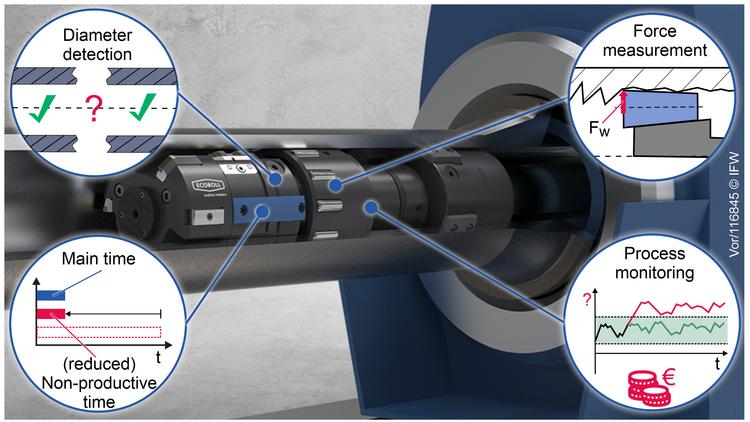
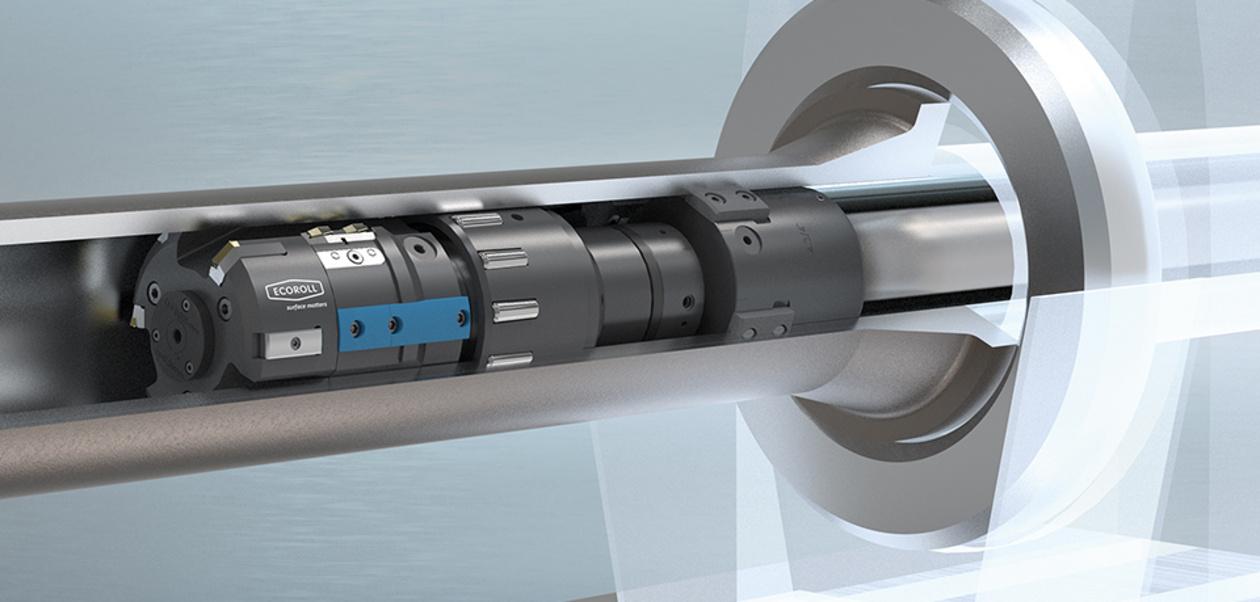
In a combined SRB operation, the skiving head processes the bore first, followed by the roller head. Both operations can be integrated into one tool assembly, allowing the tube to be machined in a coordinated production process.
This sequence is important because roller burnishing is not intended to correct major bore defects or remove large amounts of material. The bore must already be suitable for the finishing operation.
For example, if the incoming tube has excessive ovality or uneven wall thickness, the skiving stage may not be able to correct the problem within the available machining allowance. Applying roller pressure cannot reliably compensate for a poor starting condition.
7. What Factors Affect the Roller Burnishing Result?
A good surface finish depends on more than the roller tool itself. Several production factors need to be controlled.
Initial Bore Condition
The surface entering the burnishing stage should be properly machined. Deep scratches, excessive tool marks or irregular cutting patterns may remain visible after rolling.
The skiving operation should therefore produce a consistent bore before the roller head makes contact.
Roller Pressure
Pressure must be sufficient to deform the surface peaks, but excessive pressure can create problems.
Too little pressure may result in incomplete smoothing. Too much pressure can cause dimensional changes, surface damage or excessive deformation.
The appropriate setting depends on the tube material, hardness, bore size and wall thickness.
Tube Wall Thickness
Thin-walled tubes require particular attention. The tube may deform under roller pressure, making it harder to maintain a consistent internal diameter.
Uneven wall thickness can also contribute to differences in deformation around the circumference. Tool settings suitable for a heavy-wall tube should not automatically be used for a thin-wall product.
Material Hardness and Condition
Different steel grades and material conditions respond differently to plastic deformation. A harder material may require different tooling and pressure conditions from a softer one.
The supplier should consider the actual material condition rather than rely on one standard machine setting for every tube.
Tool Condition and Alignment
Worn rollers, damaged tool surfaces or poor alignment can affect the contact between the tool and bore. This may lead to inconsistent surface finish along the tube.
Regular tool inspection and stable machine setup are essential, particularly for repeat production orders.
8. Roller Burnishing vs. Honing: Which Produces a Better Inner Surface?
Both roller burnishing and honing are used to finish internal bores, but they create the surface in different ways.
| Comparison | Roller Burnishing | Honing |
|---|---|---|
| Working principle | Plastic deformation under roller pressure | Abrasive material removal |
| Material removal | No intentional cutting during burnishing | Removes a small amount of material |
| Surface result | Smooth, roller-finished profile | Characteristic cross-hatched profile |
| Dimensional correction | Limited; depends on the preceding bore condition | Can correct bore geometry within the available allowance |
| Lubricant retention | Does not create the typical honing cross-hatch | Cross-hatch can support lubricant retention |
| Typical application | SRB hydraulic cylinder tubes | Hydraulic cylinder bores requiring a honed finish or further geometric correction |
Neither process is automatically better for every cylinder design.
Roller burnishing is useful when the bore has already been prepared accurately and the required surface finish is compatible with a roller-burnished profile. Honing may be more appropriate when the design requires a cross-hatched surface or additional bore correction.
The choice should be based on the cylinder drawing, seal manufacturer's recommendations and production requirements.
9. How Should Buyers Inspect a Roller-Burnished Steel Tube?
A smooth-looking bore is not enough to confirm that a tube meets its technical requirements. Buyers should inspect the internal surface and bore dimensions separately.
Surface roughness
Specify the required Ra value and, where necessary, Rz. Confirm the measurement method and the positions where readings should be taken.
Inside diameter
Check the finished bore diameter against the drawing tolerance. A tube can have a low Ra value and still fail its dimensional requirement.
Roundness and straightness
These characteristics influence piston movement and assembly. They should be included in the inspection plan where required by the cylinder design.
Surface defects
Inspect for scratches, scoring, dents, local damage and visible irregularities. A satisfactory average roughness reading does not rule out isolated defects.
Inspection consistency
For long tubes, agree on representative measurement locations along the length and around the circumference. This helps identify variations that a single reading near the tube end could miss.
For repeat orders, the buyer and supplier should agree on the inspection method before production. This reduces the risk of disputes caused by different measurement settings or acceptance criteria.
10. Roller-Burnished Steel Tubes from Wuxi LongWei
Wuxi LongWei Precision Tube Co., Ltd. manufactures precision inner-diameter seamless steel tubes for hydraulic and pneumatic cylinder applications.
Its production equipment includes high-precision hydraulic cold drawing machines, a 9-meter skiving and roller burnishing machine, honing equipment, straightening equipment and inspection instruments.
For buyers evaluating roller-burnished tubes, the important details are the material grade, inside diameter, outside diameter, wall thickness, tube length, bore tolerance and required surface roughness.
Providing a technical drawing or detailed specification allows the required finishing route to be reviewed before production. If your application requires a particular seal-running surface, include the relevant surface finish requirements so that the process and inspection criteria can be aligned with the cylinder design.
Contact Wuxi LongWei Precision Tube Co., Ltd. to discuss your requirements for precision hydraulic cylinder tubes and skiving and roller burnishing.


