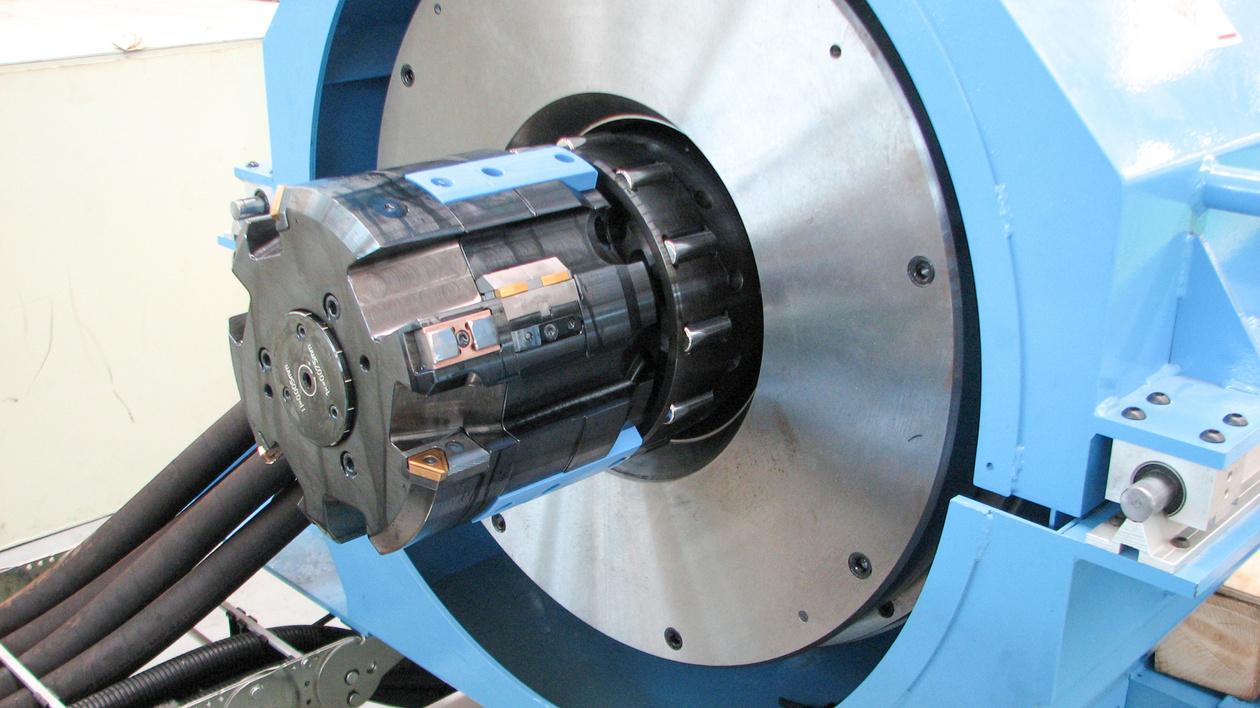
When purchasing skived and roller burnished tubes for hydraulic cylinders, one of the first technical questions is how smooth the internal bore can be. Surface roughness directly affects the contact between the cylinder bore and piston seals, so it should be treated as a functional specification rather than just an appearance requirement.
For a typical skiving and roller burnishing (SRB) process, the internal surface roughness can commonly reach Ra 0.1–0.3 μm. Depending on the tube material, wall thickness, tooling and machining conditions, some processes can achieve values around Ra 0.05–0.20 μm.
These figures are achievable process ranges reported by tooling and cylinder-tube manufacturers, not a guaranteed value for every tube. The actual result must be confirmed through inspection of the finished product.
To specify the right surface finish, buyers need to understand what these figures mean, how roller burnishing reduces roughness, and which production factors influence the final result.
1. What Ra Value Can SRB Tubes Achieve?
For hydraulic cylinder tubes, the following figures provide a useful reference:
| Manufacturing condition | Typical reported surface roughness |
|---|---|
| After skiving only | Ra 4–10 μm |
| After skiving and roller burnishing | Ra 0.1–0.3 μm |
| Finer results under suitable conditions | Ra 0.05–0.20 μm |
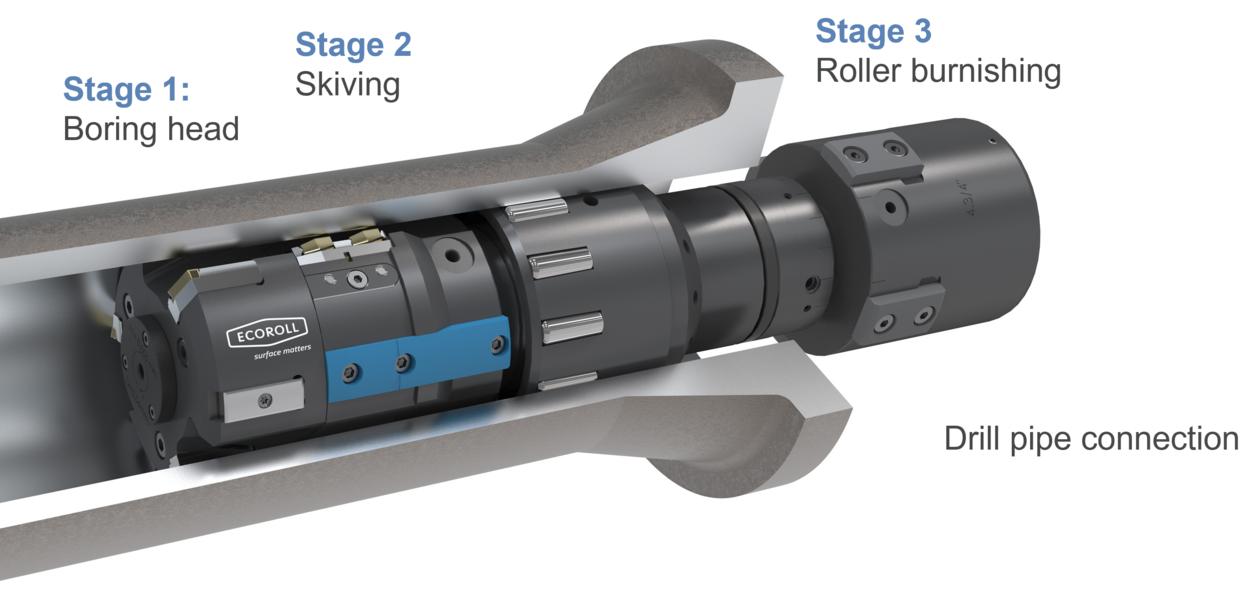
The difference between skiving and the complete SRB process is significant. Skiving removes material from the bore and establishes its dimensions, but the cutting operation alone does not produce the final low-roughness surface. Roller burnishing follows the cutting stage and reduces the surface peaks through plastic deformation.
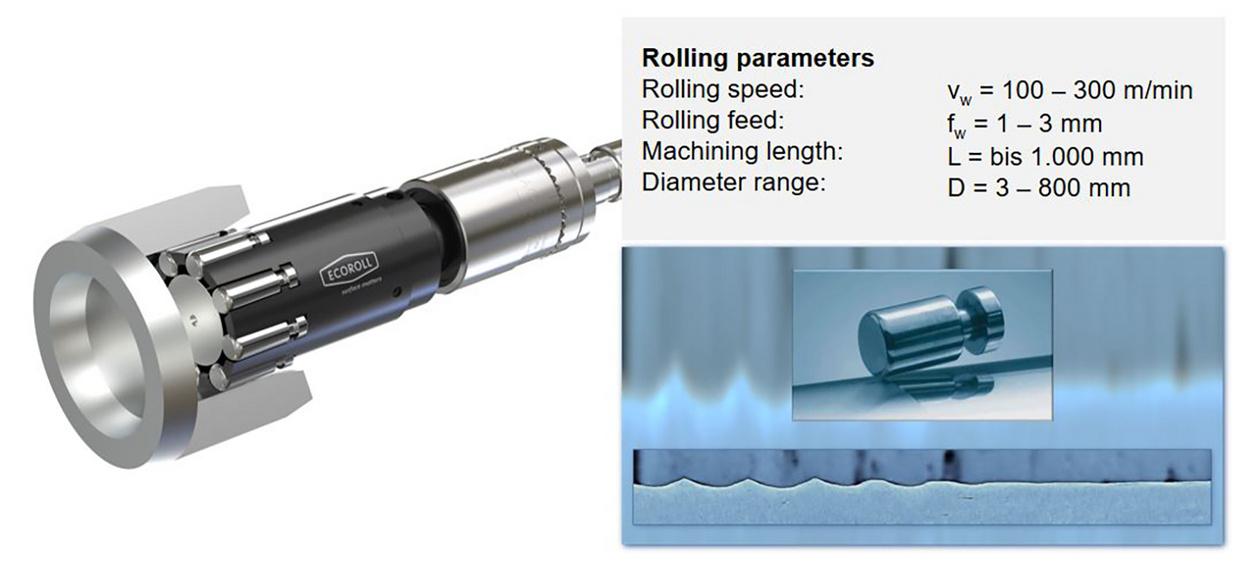
ECOROLL reports usual target values of Ra 0.1–0.3 μm and Rz below 1 μm for combined skiving and roller burnishing. Cogsdill reports Ra 0.05–0.20 μm for its roller burnishing operation. These values illustrate what suitable tooling can achieve, but they should not be treated as interchangeable guarantees for all production lines.
When comparing supplier quotations, check whether the quoted Ra value refers to the surface after skiving alone or after the complete skiving and roller burnishing process.
2. Why Does Roller Burnishing Reduce Surface Roughness?
Skiving and roller burnishing perform two different jobs.
During skiving, cutting inserts remove a controlled amount of material from the tube's internal surface. This operation establishes the bore diameter and improves its geometry. However, the cutting process leaves small surface peaks and valleys.
Roller burnishing then presses hardened rollers against the machined bore. Under controlled pressure, the surface material undergoes localized plastic deformation. The higher surface peaks are compressed and displaced into adjacent valleys, producing a smoother profile.
This is different from grinding or honing, where abrasive particles remove material.
The final result depends on the balance between the cutting stage and the rolling stage. If skiving leaves excessive irregularities, roller burnishing may not correct every defect. If the roller pressure is unsuitable, the surface may not reach the required finish, even when the skiving operation is stable.
For this reason, a good SRB process starts with a suitable tube and controlled cutting conditions. Roller burnishing is a finishing operation, not a substitute for correcting every problem in the starting material.
3. What Is the Difference Between Ra and Rz?
Buyers sometimes specify only Ra when ordering hydraulic cylinder tubes. However, Ra alone does not describe every aspect of the surface profile.
Ra – Arithmetic Average Roughness
Ra is the arithmetic average of the absolute deviations of the measured surface profile from its mean line over the evaluation length. It provides an overall indication of surface roughness.
A lower Ra generally indicates a smoother measured profile, but it does not show the full height or shape of individual peaks and valleys.
Rz – Mean Roughness Depth
Rz describes the vertical profile height using peak-to-valley measurements over sampling lengths, according to the applicable measurement standard and definition.
It helps identify larger surface irregularities that may not be obvious from Ra alone.
For SRB tubes, ECOROLL reports a usual target of Ra 0.1–0.3 μm and Rz below 1 μm. The two parameters should be considered together when the application requires tighter surface control.
Do not calculate an assumed Rz value from Ra using a fixed conversion ratio. Their relationship depends on the actual surface profile.
4. What Factors Affect the Final Surface Roughness?
Achieving a low Ra value is not simply a matter of applying more roller pressure. Several factors influence the final internal surface.
Starting Tube Quality
The condition of the incoming tube affects how consistently the bore can be machined.
Uneven wall thickness, excessive ovality, inconsistent internal dimensions or surface defects can create variations during processing. If the initial bore has significant irregularities, the skiving operation may need to remove more material or may be unable to correct the geometry within the available machining allowance.
For this reason, the starting tube should be checked before SRB processing, particularly for long hydraulic cylinder barrels.
Skiving Tool Condition
The cutting inserts determine how the initial bore is machined. Worn inserts, incorrect cutting depth or unstable tool positioning can leave an irregular surface for the roller burnishing stage.
If the skived surface varies along the tube length, the roller head may not produce a consistent final finish.
Regular insert inspection and replacement are therefore important for repeat production.
Roller Pressure and Tool Adjustment
Roller pressure must be appropriate for the material and tube dimensions.
Insufficient pressure may leave surface peaks insufficiently deformed. Excessive or unsuitable pressure can cause dimensional changes or other surface problems.
The correct setting depends on the roller tool, material condition, wall thickness and bore diameter. It should be established through process trials and verified by inspection rather than selected solely to obtain the lowest possible Ra reading.
Tube Wall Thickness
Wall thickness influences how the tube responds to the roller load.
A thin-walled tube may deform more easily under pressure, making the burnishing effect less stable. Uneven wall thickness can also contribute to dimensional variation or ovality.
This is one reason why the same SRB tooling and settings may produce different results on tubes with different dimensions.
Material and Hardness
The material must be capable of undergoing the plastic deformation required by roller burnishing.
Different steel grades, hardness conditions and material structures respond differently to the process. A setting that works well on one tube specification should not automatically be transferred to another.
The supplier should consider the material condition when selecting tooling and machining parameters.
5. Is a Lower Ra Value Always Better for Hydraulic Cylinder Tubes?
Not necessarily.
The purpose of the cylinder bore finish is to provide suitable operating conditions for the piston seal. A surface that is too rough can increase friction and accelerate seal wear. However, pursuing the lowest possible Ra without considering the sealing system is not a sound specification strategy.
The seal must maintain contact with the bore while operating under the required pressure, speed and lubrication conditions. Surface texture, not just average roughness, influences this contact.
A roller-burnished surface generally has a different profile from a honed surface. Honing commonly produces a cross-hatch pattern, while SRB produces a smoother, roller-finished profile. The cross-hatch structure can help retain lubricant in applications designed around that surface.
Therefore, the correct Ra target should come from the cylinder design and seal manufacturer's recommendations. Buyers should not assume that Ra 0.05 μm is automatically better than Ra 0.2 μm for every hydraulic cylinder.
6. How Should Buyers Specify Surface Roughness When Ordering SRB Tubes?
A purchase specification should make the required finish measurable and unambiguous.
Simply writing "smooth inner surface" or "mirror finish" leaves too much room for interpretation.
A more useful specification includes:
Ra requirement: State the maximum or target Ra value in μm.
Rz requirement: Include an Rz limit if the application requires additional profile control.
Measurement standard: Identify the applicable surface texture measurement standard and parameter definition.
Measurement location: Define whether readings are required at multiple positions along the tube and around the bore.
Inspection method: Confirm the instrument, probe suitability, evaluation length and measurement settings.
Acceptance criteria: Agree on how readings will be evaluated and documented.
Bore dimensions: Specify inside diameter, tolerance, roundness and straightness separately from surface roughness.
For long cylinder tubes, one measurement near the tube end is not enough to demonstrate consistent surface quality throughout the bore. Buyers should agree with the supplier on representative measurement positions along the length and around the circumference.
It is also important to distinguish between a roughness measurement and a complete bore inspection. A tube may meet its Ra requirement but still have dimensional or geometric problems.
7. How Can You Check the Surface Roughness of an SRB Tube?
Surface roughness is commonly checked using a suitable contact profilometer or surface roughness tester.
For internal tube measurements, the probe and extension arrangement must be suitable for the bore diameter and measurement depth. The instrument should be configured for the specified roughness parameter, filter, cutoff and evaluation length.
A practical inspection procedure includes:
First, prepare the measurement surface. Remove oil, coolant residue and loose contamination without damaging the finished bore.
Second, select representative positions. Take readings at agreed positions along the tube length and at suitable circumferential locations.
Third, use consistent measurement settings. Different cutoff lengths, filters and evaluation conditions can produce different readings. Results should only be compared when the measurement conditions are consistent.
Finally, record the results. The inspection report should identify the measured parameter, instrument or method, measurement positions and actual readings.
For repeat orders, using an agreed inspection procedure makes it easier to compare batches and identify changes in process performance.
8. What Should You Do If the SRB Tube Does Not Meet the Required Ra?
If a finished tube fails the roughness requirement, do not immediately increase roller pressure or repeat the burnishing operation.
First, identify where the problem originates.
If the roughness is already excessive after skiving, check the cutting inserts, cutting depth, feed conditions and incoming bore condition.
If the skived surface is acceptable but the final Ra is too high, inspect the roller head, roller condition, pressure setting and tool alignment. Also check whether the tube wall thickness and material condition are suitable for the selected process.
If the results vary along the tube length, review the stability of the machine setup, tool support, tube straightness and material consistency.
This approach is more effective than adjusting one process parameter without understanding the cause. Repeated burnishing is not automatically the right solution, particularly if the bore dimensions or surface profile have already changed.
9. Achieving Consistent SRB Surface Quality at Wuxi LongWei
For hydraulic cylinder manufacturers, the target is not simply to produce one tube with a low Ra value. It is to maintain consistent internal surface quality across the required tube length and production batches.
Wuxi LongWei Precision Tube Co., Ltd. manufactures precision inner-diameter seamless steel tubes for hydraulic and pneumatic cylinder applications. Its production equipment includes high-precision hydraulic cold drawing machines, a 9-meter skiving and roller burnishing machine, honing equipment, straightening equipment and inspection instruments.
When discussing an SRB tube order, buyers should provide the material grade, inside diameter, outside diameter, wall thickness, tube length, required Ra and Rz values, and dimensional tolerances.
These details allow the required finishing process and inspection requirements to be reviewed before production. If your application has a specific piston seal or bore surface requirement, sharing the relevant drawing or seal specification will also help clarify the appropriate surface finish.
Contact Wuxi LongWei Precision Tube Co., Ltd. to discuss your hydraulic cylinder tube requirements and the suitable skiving and roller burnishing process.